


Staying connected can make international travel much easier, whether you need Google Maps to find your hotel, a ride-hailing app after landing, or messaging to keep in touch with family. However, using a regular mobile plan abroad can result in roaming charges, while relying entirely on public Wi-Fi can leave you without internet when you need it most.
A travel eSIM offers another option. Instead of depending on your home carrier’s international roaming service or buying a physical SIM after arrival, you can install a digital SIM and use a dedicated travel data plan. The best travel eSIMs for international trips differ in coverage, data allowances, validity periods, activation, and supported destinations. Understanding these differences can help you choose a plan that matches your itinerary and usage.
What Is a Travel eSIM?
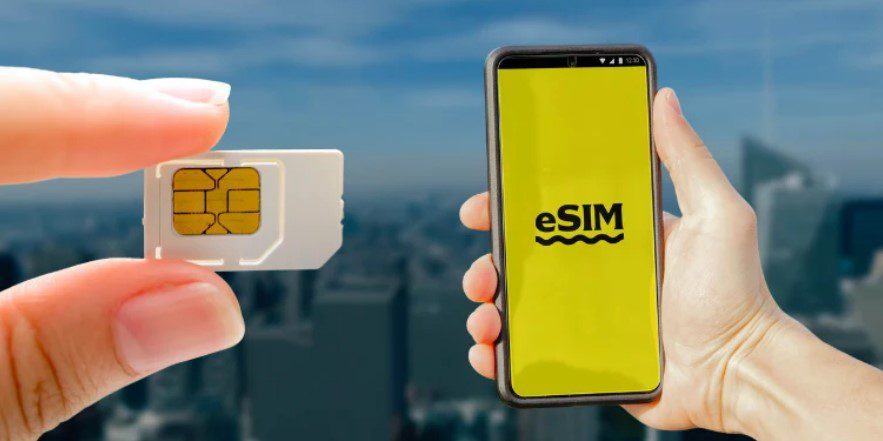
An eSIM is a digital version of a SIM card built into a compatible smartphone. Unlike a physical SIM, it does not need to be inserted into the phone. A travel eSIM uses this technology to provide mobile connectivity through a separate plan designed for use outside your home country.
Travel eSIM providers generally offer plans for individual countries, regions, or multiple destinations. This means you can choose a plan based on where you are going rather than relying on your domestic carrier’s roaming service.
For example, someone visiting Japan for a week may only need a Japan-specific plan. A traveler visiting France, Germany, Italy, and Spain may find a regional European plan more convenient. Someone taking a longer trip across several continents may look for a global option.
A compatible and unlocked device is generally required. Travelers should also check the specific provider’s coverage and activation conditions before purchasing a plan.
How to Choose the Best Travel eSIM for International Trips
There is no single eSIM plan that suits every traveler. The right choice depends on your destination, itinerary, data usage, trip length, and the features you actually need.
Destination Coverage
Coverage should be the first thing you check. An eSIM may advertise international or regional coverage, but that does not necessarily mean every country is included in every plan. Check the exact countries covered by the plan before purchasing it. This is especially important for multi-country trips where you may cross borders several times.
For example, if your itinerary includes France, Switzerland, Italy, and the United Kingdom, verify that all four destinations are included in the same regional plan. If one country is excluded, you may need another plan for that part of the trip.
Data Allowance
Consider how you normally use your phone. A traveler who mainly uses messaging, maps, email, and occasional browsing may not need a large data package. Someone who frequently streams videos, uploads photos, makes video calls, or uses their phone as a hotspot will need considerably more data.
Buying the largest plan available is not always necessary. The goal is to choose an allowance that provides enough data without paying for more than you are likely to use.
Plan Duration
Travel eSIMs are usually sold with specific validity periods. These can vary from short trips to longer travel periods. Make sure the plan covers your entire trip, including the day you arrive and the day you leave.
Also check when the validity period begins. Some plans activate when they connect to a supported network, while others may have different activation conditions.
Regional vs Global Plans
Regional plans are designed for travelers visiting several countries within a particular area. They can be useful when a single trip includes multiple destinations. Global plans cover a broader selection of countries and may be more appropriate for travelers with international itineraries that span different regions.
A regional plan can make sense for a European vacation, while a global plan may be more practical for someone traveling through Europe, Asia, and North America on the same journey.
Network Access and Speed
An eSIM provider does not necessarily operate its own mobile network in every destination. Instead, the eSIM typically connects through local network partners. As a result, actual performance can depend on the destination, available networks, local coverage, network congestion, device compatibility, and other conditions.
Before buying, check which networks are supported where you are traveling and whether the plan has any restrictions on speed or hotspot usage.
Activation and Setup
The installation process can vary between providers. Some services allow users to purchase and install a plan through an app, while others may require a QR code or manual activation details.
A simple setup can be particularly useful when arriving in a new country because you can prepare the eSIM before departure rather than searching for a SIM store after landing.
Customer Support
Connectivity problems can be frustrating when you are abroad. If the eSIM fails to connect, you may need assistance with installation, network selection, activation, or account issues. For this reason, customer support is another factor worth checking before choosing a provider.

Best Travel eSIMs for International Trips
Several providers offer international, regional, and country-specific eSIM plans. However, their plan structures and features differ.
| Provider | Coverage Approach | Plan Types | Potentially Suitable For |
| Saily | 200+ destinations | Local, regional, and global | Travelers looking for app-based setup and flexible destination options |
| Airalo | 200+ locations | Local, regional, and global | Travelers who want a broad range of destination plans |
| Holafly | 160+ destinations through its international offerings | Unlimited and other data options | Travelers who prioritize high-data usage |
| Nomad | Multiple countries and regions | Country and regional options | Travelers comparing destination-specific plans |
| Ubigi | Multiple international destinations | Country, regional, and other plans | Travelers looking for destination-based connectivity |
Plan availability, prices, data allowances, and terms can change, so travelers should check the specific plan for their destination before purchasing.
Saily
Saily provides prepaid eSIM data plans across more than 200 destinations. Its offering includes country-specific, regional, and global options, allowing travelers to select a plan according to their itinerary.
One of the main conveniences is app-based setup. Travelers can purchase a plan and install the eSIM before leaving home, allowing them to prepare their mobile connection in advance.
Saily also provides 24/7 customer support. Its service is primarily designed around mobile data, although an optional phone-number feature is available for supported use cases.
For travelers visiting several countries, regional plans can be useful because one eSIM can cover multiple destinations within the relevant region rather than requiring a separate purchase for every country.
Saily also provides security-focused features within its app, including tools designed to help protect browsing activity while traveling.
Airalo
Airalo offers eSIM plans for more than 200 locations and provides local, regional, and global options.
Its local plans are designed around individual destinations, while regional and global plans are intended for travelers visiting multiple countries. Airalo also offers both fixed-data and unlimited options on selected plans.
This variety can be useful for travelers who want to compare different plan structures before choosing an eSIM. The exact allowance, validity, supported networks, and features depend on the destination and package selected.
Airalo also provides an app through which users can purchase and manage eSIM plans.
Holafly
Holafly is particularly associated with high-data and unlimited-data travel eSIM options. Its international offerings cover more than 160 destinations, with plan conditions varying according to the destination and package.
This type of plan can appeal to travelers who expect to use significant amounts of mobile data for navigation, social media, video calls, streaming, or other activities.
However, unlimited does not always mean unrestricted in every situation. Travelers should check the specific plan’s fair-use conditions, hotspot rules, validity period, and other limitations before purchasing.
For someone who uses relatively little data, a fixed-data plan from another provider may be more appropriate.
Nomad
Nomad provides travel eSIM plans across multiple destinations, including country-specific and regional options. Its approach can suit travelers who prefer to choose a plan according to a particular destination rather than purchasing a broad international package.
As with other providers, the details vary between plans. Travelers should compare the data allowance, validity period, network support, activation requirements, and top-up options for their specific destination.
This is particularly important for multi-country trips because a country-specific plan may not continue working after crossing a border.
Ubigi
Ubigi offers travel eSIM services across multiple destinations and provides different options depending on where you are traveling. Its plans can be considered by travelers who want a dedicated mobile data connection without replacing their physical SIM.
Before purchasing, check the exact destination coverage and plan conditions. Features such as data allowances, validity, network access, and hotspot support can vary between destinations.
Travel eSIMs Compared: What Matters Most?
Looking at the provider name alone is not enough to determine which eSIM is suitable. Your travel plans should determine what you prioritize.
For Short International Trips
For a short trip, convenience can be more important than having a large data allowance. A traveler spending five days in one country may only need enough data for maps, messaging, transportation apps, restaurant searches, and occasional browsing. A country-specific eSIM can therefore be sufficient, especially when most activities can be done over hotel or café Wi-Fi.
For Multi-Country Trips
Multi-country trips are where regional eSIMs can become particularly useful. Instead of purchasing a new SIM or eSIM every time you cross a border, a regional plan may allow you to use one plan across several included destinations.
For example, someone taking a trip through several European countries can compare European regional plans rather than purchasing separate plans for every stop. However, always check the included country list. Regional coverage is not automatically universal across an entire continent.
For Long Trips
Longer trips require closer attention to validity and data allowances. A plan that works well for a one-week vacation may not be suitable for a month-long trip. Look for longer validity periods, sufficient data, and the ability to purchase additional data if required. It is also worth checking whether unused data expires when the plan ends.
For Heavy Data Users
Travelers who regularly stream videos, upload large files, use video calls, or share their connection through a hotspot will generally need more data than someone who only uses messaging and maps.
For heavy users, compare plans based on actual data conditions rather than simply looking for the word “unlimited.” Check whether unlimited plans have fair-use policies, speed restrictions, or hotspot limitations.
For Light Data Users
Light users may not need an unlimited plan at all. If your main activities are checking directions, sending messages, reading emails, booking transportation, and occasionally browsing the internet, a smaller fixed-data plan may be enough. This can also make it easier to control your travel connectivity costs.
Travel eSIM vs Local SIM vs International Roaming
Travel eSIMs are not the only way to get mobile internet abroad. Local SIM cards and international roaming remain common alternatives.
| Feature | Travel eSIM | Local SIM | International Roaming |
| Physical SIM required | No | Usually | No |
| Can be arranged before departure | Usually | Usually not | Yes |
| Multiple countries | Regional/global plans may cover several | May require separate SIMs | Depends on carrier |
| Keeps home SIM available | Yes, on compatible dual-SIM devices | Usually requires swapping or using a second SIM slot | Yes |
| Setup convenience | Generally high | Moderate | High |
| Data pricing | Depends on provider and destination | Depends on local operator | Depends on home carrier |
| Local phone number | Often not included | Usually available | Existing number remains |
A local SIM can be useful for longer stays or when local calls and texts are important. International roaming can be convenient when your existing mobile plan includes affordable international usage.
A travel eSIM sits between these options by providing a separate digital connection without requiring travelers to physically replace their SIM.
How to Set Up a Travel eSIM Before an International Trip
Setting up your eSIM before departure can make the arrival process much easier.
Check Phone Compatibility
First, confirm that your smartphone supports eSIM technology. Not every device supports eSIM, and compatibility can vary by model and market.
Make Sure Your Phone Is Unlocked
A carrier-locked phone may prevent you from using an eSIM from another provider. Check your phone’s carrier or network-lock status before purchasing a travel plan.
Purchase the Appropriate Plan
Choose the country, region, or global plan that matches your itinerary. Do not assume that a regional plan covers every destination you will visit. Check the included countries before completing the purchase.
Install the eSIM Before Departure
Installing the eSIM while you still have a reliable internet connection can make the process easier. With Saily, for example, the eSIM can be purchased and installed through the app before departure. The company recommends preparing the eSIM before reaching the destination so travelers can get connected when they arrive.
Select the Travel eSIM for Mobile Data
After reaching your destination, select the travel eSIM as the mobile data line. If you want to avoid roaming charges from your regular SIM, review your primary line’s data roaming settings and make sure your phone is not automatically switching mobile data between lines.
How Much Data Do You Need When Traveling?
Your daily phone habits are more useful for estimating data requirements than the length of your trip alone.
| Travel Style | Typical Activities | General Data Requirement |
| Light | Messaging, maps, email, occasional browsing | Low |
| Moderate | Social media, navigation, browsing, photo uploads | Moderate |
| Heavy | Frequent video calls, streaming, large uploads | High |
| Very heavy | Regular streaming, hotspot use, large downloads | Very high |
Remember that video streaming and video calls can consume significantly more data than messaging or reading websites. You can also reduce your usage by downloading offline maps, music, movies, and other content before leaving.
Are Travel eSIMs Worth It for International Travel?
A travel eSIM can be useful when you want mobile internet without relying on your home carrier’s standard roaming service. It can be particularly convenient for:
- Short international trips
- Multi-country itineraries
- Travelers who want connectivity immediately after landing
- People who do not want to swap physical SIM cards
- Travelers who mainly need mobile data
- Frequent international travelers
However, an eSIM is not automatically the right choice for everyone. Your phone must support the technology, and some plans are data-only. Coverage can also vary by destination, while network performance depends on local infrastructure and conditions. Travelers should therefore compare the actual plan details rather than choosing an eSIM based only on brand recognition.
Which Travel eSIM Should You Choose?
The right travel eSIM depends on your itinerary and how you use your phone.
For a single-country trip: Compare country-specific plans based on data, validity, coverage, and price.
For a multi-country trip: Look at regional plans and confirm that every destination is included.
For trips across multiple continents: A global plan may provide a simpler way to manage connectivity across different regions.
For heavy data usage: Compare larger or unlimited-data plans and check their fair-use and hotspot policies.
For simple setup: Look for providers that offer straightforward app-based installation and clear activation instructions.
For frequent travel: Consider providers that offer plans across many destinations so you do not have to learn a completely different setup for every trip.
Saily is one option for travelers looking for international eSIM connectivity, with plans available across more than 200 destinations and local, regional, and global options. The service is managed through its app, so you can purchase and prepare a plan before traveling.
Final Thoughts
The best travel eSIM for an international trip depends less on the provider’s name and more on whether the plan matches your actual travel needs.
Start with your destinations, then compare coverage, data allowance, validity, network access, activation, hotspot policies, and customer support. A traveler spending a week in one country may need a very different plan from someone visiting five countries over a month.
Travel eSIMs simplify international connectivity by removing the need to buy a physical SIM after arrival. Providers such as Saily, Airalo, Holafly, Nomad, and Ubigi offer different approaches to international connectivity, so comparing the specific plan terms is essential.
For most travelers, the goal is straightforward: choose a plan that covers every destination on the itinerary, provides enough data for everyday use, and can be set up without unnecessary hassle before the journey begins.







Leave feedback about this