


Having reliable internet while traveling can make an unfamiliar destination much easier to navigate. You may need mobile data to check directions, book a ride, translate a menu, contact your hotel, access travel documents, or message family and friends. Without a reliable connection, even simple tasks can become inconvenient.
Travelers have several ways to get internet abroad, including international roaming, public Wi-Fi, local SIM cards, travel eSIMs, and portable Wi-Fi devices. Each option has different advantages depending on the destination, trip length, budget, and amount of data you expect to use.
For many international travelers, a travel eSIM provides a convenient way to get mobile internet without changing a physical SIM card. However, it is worth comparing all the available options before deciding what works for your trip.
What Are Your Options for Getting Internet While Traveling?
The best way to get internet while traveling depends on how and where you travel. A person spending a week in one city may have different needs from someone visiting several countries over a month. The main options include international roaming, travel eSIMs, local SIM cards, Wi-Fi, and portable hotspots.
International Roaming
International roaming allows your regular mobile phone plan to connect to a foreign network through an agreement between your home carrier and local operators. The main advantage is convenience. You can usually continue using your existing SIM and phone number without purchasing another connection.
The downside is that international roaming can be expensive if your regular plan does not include overseas usage. Some carriers offer international passes or packages, but the available countries, data allowances, and pricing vary. Before relying on roaming, check exactly what your carrier includes at your destination.
Travel eSIM
A travel eSIM provides mobile data through a digital SIM profile installed directly on a compatible smartphone. Instead of using your home carrier’s international roaming service, you purchase a separate travel plan for the country or region you are visiting.
Travel eSIMs can be particularly useful for people who want to arrange their internet connection before leaving home. You can often install the eSIM in advance and activate or connect it when you arrive.
Saily is one travel eSIM provider offering plans across more than 200 countries and regions. Its plans include local, regional, and global options, allowing travelers to choose according to their itinerary.
Local SIM Card
Buying a local SIM card is another common way to get internet abroad. You purchase a SIM from a local mobile operator after arriving and use it instead of your regular SIM. Local plans may include mobile data, calls, and texts, depending on the operator and package.
A local SIM can be useful for longer stays, especially if you need a local phone number. However, finding a store, completing any required registration, and physically replacing your SIM can be inconvenient. Travelers using a single-SIM phone also need to store their regular SIM safely during the trip.
Public Wi-Fi
Hotels, airports, restaurants, cafés, shopping centers, and other public locations often provide Wi-Fi. Using Wi-Fi can reduce the amount of cellular data you need, particularly when staying at your accommodation.
The main limitation is availability. You cannot rely on hotel or café Wi-Fi when you are walking through a new city, waiting for transportation, or visiting an area without a convenient connection. Public networks can also present security concerns, so travelers should be cautious when accessing sensitive accounts over unfamiliar Wi-Fi.
Portable Wi-Fi
Portable Wi-Fi devices, sometimes called pocket Wi-Fi, create a private wireless connection that can be shared between multiple devices. This can be useful for families, couples, or groups traveling together because several phones, tablets, or laptops can connect to the same device.
However, you have another device to carry and charge. Depending on the provider and destination, you may also need to collect and return the device.
What Is the Best Way to Get Internet While Traveling?
There is no universal answer because the best option depends on your trip. For occasional internet use in a hotel, Wi-Fi may be enough. For a long stay in one country, a local SIM can provide a practical connection.
International roaming may be convenient if your existing carrier already includes affordable overseas data. For travelers who want mobile internet without changing their physical SIM, a travel eSIM can be a convenient alternative.
A travel eSIM is particularly useful when you need internet immediately after landing. Instead of searching for a local SIM store at the airport, you can prepare the eSIM before departure and switch your mobile data connection when you reach your destination.
Travel eSIM vs Wi-Fi
Wi-Fi and travel eSIMs serve different purposes.
| Feature | Travel eSIM | Wi-Fi |
| Works while walking around | Yes, where supported network coverage is available | No, unless within a Wi-Fi hotspot |
| Setup before travel | Usually possible | Usually not required |
| Requires a physical device | No | Depends on the Wi-Fi source |
| Works during transportation | Often | Usually not |
| Available in hotels | Yes | Often |
| Mobile data allowance | Depends on plan | Depends on network |
| Useful for multiple devices | Depends on hotspot support | Usually |
| Security considerations | Uses mobile network | Public Wi-Fi requires additional caution |
Wi-Fi is useful as a supplement to mobile data. For example, you can use hotel Wi-Fi for large downloads or streaming while using your eSIM when you are away from your accommodation.
This combination can help reduce mobile data usage without leaving you completely dependent on public networks.
Travel eSIM vs Local SIM
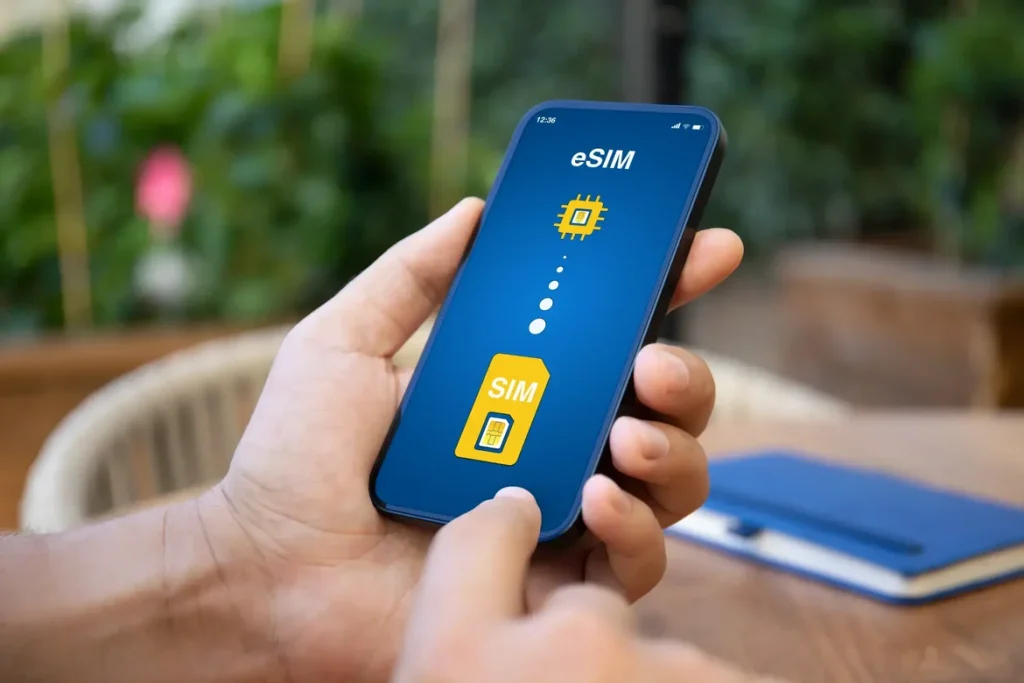
A travel eSIM and local SIM can both provide mobile internet abroad, but the setup process is different.
| Feature | Travel eSIM | Local SIM |
| Physical SIM required | No | Usually |
| Can be purchased before departure | Yes | Usually after arrival |
| Requires SIM replacement | No | Usually |
| Local phone number | Often not included | Usually available |
| Multi-country use | Regional/global plans may support it | May require additional SIMs |
| Setup convenience | Generally high | Moderate |
| Suitable for longer stays | Yes, depending on plan | Often |
A local SIM may be useful if you are staying in one country for an extended period and need local calling or texting.
A travel eSIM may be more convenient for tourists who want data without dealing with a physical SIM card.
Travel eSIM vs International Roaming
International roaming is convenient because you can continue using your existing mobile connection.
However, the cost and conditions depend entirely on your home carrier and plan.
A travel eSIM separates your travel data from your regular mobile plan. You can purchase a specific amount of data for your trip rather than relying on your carrier’s standard roaming rates.
| Feature | Travel eSIM | International Roaming |
| Uses your regular carrier | No | Yes |
| Existing SIM can remain in phone | Yes | Yes |
| Separate travel data plan | Yes | Not necessarily |
| Cost structure | Provider-specific | Carrier-specific |
| Requires compatible device | Yes | Usually no additional hardware |
| Multi-country options | Regional/global plans may be available | Depends on carrier |
| Setup | Requires eSIM installation | Usually simpler |
Neither option is automatically better for every traveler. Compare the total cost, data allowance, destinations, and terms before making a decision.
How to Choose Internet for Your Trip
Your itinerary should determine the type of connection you choose.
For a Single-Country Trip
If you are visiting only one country, compare local SIMs, country-specific eSIMs, and your carrier’s roaming options. A country-specific eSIM can be convenient because you can prepare it before departure and avoid looking for a physical SIM after arrival.
For a Multi-Country Trip
If your itinerary includes several countries, check whether a regional eSIM covers all your destinations. For example, a traveler visiting France, Italy, Germany, and Spain may find a European regional plan easier to manage than purchasing separate connections in every country. Always check the exact country list because regional coverage differs between providers and plans.
For a Short Trip
For a weekend or one-week trip, convenience may be particularly important. You may not want to spend time finding a SIM shop or arranging a long-term local plan. A short-duration travel eSIM can provide a simple way to get mobile data for the duration of the trip.
For a Long Trip
For longer travel, compare the total cost over the entire stay. Look at validity periods, available data, top-up options, and whether the provider offers longer-duration plans. A local SIM may also make sense for an extended stay, particularly if you need a local number.
For Heavy Data Use
If you stream videos, make frequent video calls, upload large files, or use your phone as a hotspot, data allowance becomes one of the most important factors. Do not select a plan solely because it says “unlimited.” Check the provider’s terms for fair-use policies, speed restrictions, hotspot limitations, and other conditions.
For Light Data Use
If you mainly use maps, messaging, email, translation apps, and occasional browsing, you may not need a large data plan. A smaller eSIM package combined with hotel or other trusted Wi-Fi can be sufficient for many travelers.
How to Get Internet Abroad With a Travel eSIM
Getting connected with a travel eSIM usually involves a few basic steps.
1. Check Your Phone
Make sure your phone supports eSIM technology. You should also check whether the device is carrier-unlocked. A locked device may restrict you from using an eSIM from another provider.
2. Choose Your Destination
Select a plan that covers the country or countries you will visit. If you are traveling across multiple countries, check whether a regional or global plan covers the entire itinerary.
3. Purchase the Plan
Choose your data allowance and validity period according to your expected usage. Do not automatically choose the largest plan. Consider what you actually use your phone for during travel.
4. Install the eSIM
Install the eSIM before leaving home if the provider allows it. Saily, for example, allows travelers to purchase and install its eSIM through its app. Preparing it before departure means you can focus on connecting when you arrive rather than completing the entire installation process at the airport.
5. Activate the eSIM
Activation procedures differ between providers and devices. Some eSIMs activate when they connect to a supported network at the destination, while others may have specific activation instructions. Follow the provider’s instructions rather than assuming that installing an eSIM automatically means the plan is active.
6. Select the eSIM for Mobile Data
After reaching your destination, open your phone’s SIM or cellular settings and select the travel eSIM for mobile data. If you are trying to avoid roaming charges, check that your primary SIM is not being used for mobile data. On phones with dual-SIM functionality, also check whether automatic mobile data switching is enabled.
How to Save Mobile Data While Traveling
Even with a travel eSIM, managing your data can help your plan last longer.
Download Maps Before You Leave
Many mapping services allow travelers to download maps for offline use. This can reduce your dependence on mobile data when navigating familiar routes or exploring areas with weak connectivity.
Turn Off Automatic Updates
Apps can consume data in the background. Disable automatic updates over mobile data where appropriate and update applications when connected to Wi-Fi.
Limit Automatic Photo Backups
Photos and videos can use a significant amount of data, particularly when they are automatically uploaded to cloud storage. Consider restricting automatic backups to Wi-Fi.
Download Entertainment in Advance
If you expect to watch videos or listen to music during flights, train journeys, or other periods without reliable Wi-Fi, download the content before leaving.
Monitor Data Usage
Your smartphone can usually show how much mobile data individual apps have consumed. Checking these settings during your trip can help identify applications that are using more data than expected.
What to Do If Your Internet Stops Working Abroad
Losing mobile internet while traveling can be frustrating, but several basic checks can help identify the problem.
First, make sure the travel eSIM is enabled and selected for mobile data. Then check whether data roaming is enabled if the provider requires it for the travel eSIM to connect. This setting can be different from roaming through your primary carrier, so follow the provider’s specific instructions. You can also try:
- Turning airplane mode on and off
- Restarting the phone
- Checking whether you are within the plan’s coverage area
- Confirming that your plan has not expired
- Checking your remaining data
- Selecting a supported network manually if automatic selection does not work
If the problem continues, contact the eSIM provider’s customer support.
Is a Travel eSIM Worth It?
For many international travelers, a travel eSIM can simplify the process of getting mobile internet abroad. It can be particularly useful when you want to stay connected immediately after landing, travel through multiple countries, or avoid removing your physical SIM.
It also gives you another option besides international roaming. Instead of relying entirely on your home carrier, you can select a separate data plan based on your destination and expected usage. However, travelers should check device compatibility, network coverage, data limits, validity, and hotspot rules before purchasing.
Saily offers travel eSIM plans across more than 200 countries and regions, including local, regional, and global options. This makes it an option worth considering for travelers who want to arrange their mobile data connection before departure.
Final Thoughts
The best way to get internet while traveling depends on your destination, trip duration, data usage, and preference for convenience. Wi-Fi can work well at hotels and other fixed locations, while local SIMs can be useful for longer stays. International roaming may be convenient when your carrier provides suitable travel options.
For travelers who want mobile data without changing a physical SIM, a travel eSIM can provide a flexible alternative. Before your trip, compare coverage, data allowances, validity periods, activation requirements, and network conditions.
If you choose an eSIM, install it before departure, configure your phone correctly, and make sure your travel plan is selected for mobile data when you arrive. A few minutes of preparation can make it much easier to stay connected throughout your trip without depending on whichever internet option happens to be available when you land.







Leave feedback about this