

Fiber is one of those nutrients that sounds easy to get enough of until a typical day of eating is actually examined. Breakfast might be toast and eggs, lunch could be a sandwich, and dinner may consist of protein with a small serving of vegetables. None of these meals are necessarily unhealthy, but they can leave a person consuming considerably less fiber than intended.
The recommended daily intake varies by age and sex, but many Americans do not consistently reach their fiber needs through food alone. That is where a fiber supplement can become useful.
However, finding the best fiber supplement for daily use is not simply about choosing the product with the largest serving or the longest list of health claims. The type of fiber, ingredients, dosage, hydration requirements, ease of use, and individual digestive tolerance all deserve attention.
ColonBroom is one option built around psyllium husk, a soluble fiber that absorbs water and expands in the digestive tract. The brand’s original powder is designed to make adding fiber to a daily routine relatively straightforward.
For anyone considering a fiber supplement, understanding how psyllium works and how to use it properly can be more valuable than simply comparing product names.
Why Fiber Is Important in the First Place
Fiber is found naturally in plant foods, including fruits, vegetables, legumes, nuts, seeds, and whole grains. Unlike many other carbohydrates, fiber is not completely broken down during digestion. Depending on its type, it can absorb water, add bulk to stool, or provide other effects within the digestive system.
Soluble fiber dissolves in water and can form a gel-like substance. Psyllium husk is an example of this type of fiber. Insoluble fiber, meanwhile, does not dissolve in water and contributes bulk to stool.
A high-fiber eating pattern can support digestive health, bowel regularity, fullness, and overall dietary quality. This is why supplements should generally be considered a way to fill a gap, rather than a replacement for fiber-rich foods.
A person who regularly eats beans, lentils, vegetables, berries, oats, whole grains, nuts, and seeds may already be getting substantial fiber. Someone whose meals rely heavily on refined grains and processed foods may have a much larger gap to fill.
What Makes a Fiber Supplement Suitable for Daily Use?
There is no single fiber supplement that is automatically best for everyone. The right choice depends on why the supplement is being used and how well the individual tolerates it. Here are some of the most important factors to compare.
Fiber type
Different fibers behave differently in the digestive system. Psyllium is a soluble, gel-forming fiber that absorbs water and is commonly used to increase stool bulk.
Amount per serving
A label should clearly state how much fiber is provided by a serving. More is not necessarily better, particularly for someone who is new to supplemental fiber.
Ingredient list
A transparent ingredient list makes it easier to understand what is actually being consumed.
Preparation
Some people prefer capsules, while others find a powder easier to incorporate into their routine.
Hydration requirements
This is particularly important with psyllium. Because psyllium absorbs water and expands, it needs to be taken with sufficient liquid.
Digestive tolerance
A product that causes significant discomfort is unlikely to be a good long-term choice, regardless of how impressive its ingredient list looks.
Why Psyllium Is Used in ColonBroom
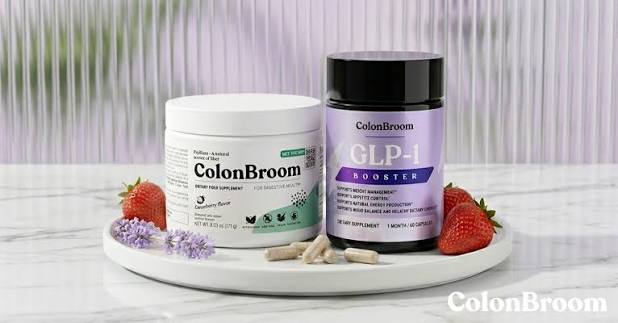
Psyllium husk is the central ingredient in ColonBroom’s original fiber powder. According to the brand, psyllium is used because it absorbs water and becomes a viscous substance as it moves through the digestive system.
ColonBroom’s current ingredient information lists psyllium husk powder alongside natural flavor, citric acid, crystallized lemon, stevia leaf extract, sea salt, fruit and vegetable juice for color, and rice hulls. The company also notes that ingredient lists can change, so the packaging should be checked for the most current information.
The use of psyllium is not unique to ColonBroom. Psyllium is a well-established type of bulk-forming fiber and is also used in other fiber products. What makes ColonBroom different is primarily the way the ingredient is packaged and marketed as part of a convenient daily routine.
ColonBroom Is Not a Substitute for a High-Fiber Diet
This distinction is important. A fiber supplement can provide additional fiber, but it does not provide everything found in fiber-rich whole foods.
For example, beans and lentils provide fiber along with plant-based protein and other nutrients. Fruits and vegetables provide fiber alongside vitamins, minerals, and various plant compounds. Whole grains contribute fiber and other nutrients as part of a balanced diet.
A practical strategy is therefore:
Eat fiber-rich foods first, then use a supplement when additional fiber is needed.
This approach also makes it easier to identify why a supplement is being used. If someone regularly eats very little fiber, simply adding a supplement without changing the underlying diet may not be the most useful long-term strategy.
On the other hand, if someone generally eats well but struggles to reach their desired fiber intake consistently, a supplement can be a convenient addition.
How to Introduce Fiber Without Making Your Stomach Unhappy
One of the biggest mistakes people make with fiber supplements is increasing their intake too quickly. The digestive system may need time to adjust to a sudden increase in fiber. Gas, bloating, or changes in bowel movements can occur when intake rises rapidly.
ColonBroom specifically recommends that new users start with one serving per day for the first five days before increasing to two servings per day. That gradual approach is useful because it allows the individual to see how their body responds.
Someone who already consumes a high-fiber diet may also need to consider their total daily intake before adding a full supplemental dose. The goal is not to introduce as much fiber as possible. The goal is to establish an amount that complements the diet and can be tolerated consistently.
How to Take ColonBroom
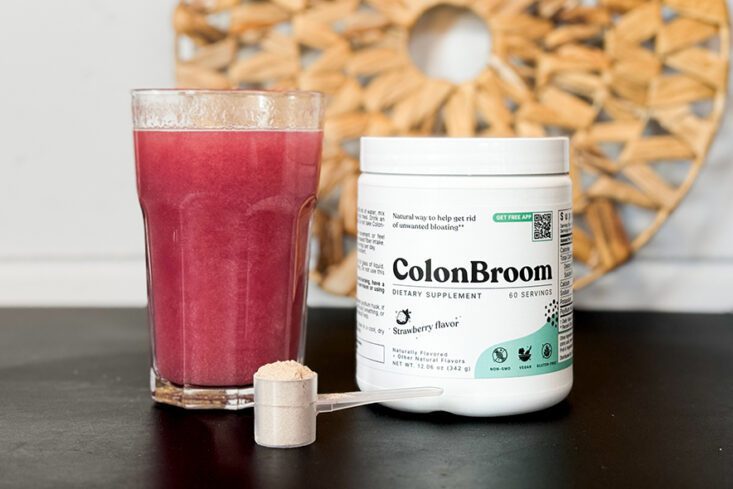
ColonBroom’s current instructions recommend mixing one tablespoon, approximately 5.7 grams, of the powder with 8 fluid ounces of water. The mixture should be stirred and consumed, followed by an additional glass of water. The brand recommends taking it up to twice daily, one hour before or 30 minutes after a meal.
New users are advised to begin with one serving per day for the first five days. ColonBroom also advises against taking the supplement at bedtime. These instructions matter because psyllium is not simply a powder that can be swallowed dry. Adequate liquid is an essential part of taking it safely. The brand warns that insufficient water can cause the product to swell in the throat, potentially resulting in blockage or choking.
Hydration Should Be Part of the Plan
Anyone using a psyllium-based fiber supplement should pay attention to fluid intake throughout the day. Psyllium absorbs water. That is a major part of its function, but it also means that taking it without adequate liquid is not a sensible approach.
ColonBroom’s instructions specifically include an additional glass of water after consuming the fiber drink. This makes hydration more than a minor supplement tip. It is part of using the product correctly.
Someone who struggles to drink enough fluids may want to address that habit before introducing a larger amount of supplemental fiber.
Fiber Supplements and Medications
Medication timing is another consideration that can easily be overlooked. ColonBroom advises people taking medication to consume the supplement at least two hours before or after their medicines.
This precaution exists because fiber can affect how certain medications are absorbed. Anyone taking prescription medications, particularly multiple medications, should check with a physician or pharmacist before adding a daily fiber supplement.
This is one of the areas where generic supplement advice is not enough. An otherwise healthy person and someone managing several medications may have very different considerations.
Is ColonBroom Useful for Constipation?
Psyllium is commonly used as a bulk-forming fiber for constipation. Because it absorbs water and increases stool bulk, it can help support bowel regularity when used appropriately.
ColonBroom states that users may notice changes in bowel movements within 24 to 72 hours and that improvement may become more noticeable after several days of consistent use.
However, digestive symptoms should not automatically be attributed to a lack of fiber. Persistent constipation can have many causes, including dietary habits, medications, dehydration, inactivity, and underlying medical conditions.
If constipation is severe, persistent, accompanied by significant pain, or associated with other concerning symptoms, it is better to seek medical advice than to continually increase a supplement dose.
What About Bloating?
Bloating is another reason people look for fiber supplements, but the relationship between fiber and bloating is not always straightforward. Increasing fiber too quickly can temporarily increase gas and bloating.
ColonBroom acknowledges that some users may experience mild bloating or changes in bowel movements during the initial adjustment period. This is why gradual introduction matters.
It is also useful to consider the rest of the diet. If someone suddenly increases fiber from multiple sources at once, it may become difficult to identify what is causing digestive discomfort. A better approach is to make changes gradually and monitor how the body responds.
Can a Fiber Supplement Help With Weight Management?
Fiber is frequently associated with weight management because fiber-rich foods can contribute to feelings of fullness. That does not mean a fiber supplement directly causes fat loss.
ColonBroom states that soluble fiber can reduce appetite and sugar cravings and notes that weight loss also depends on factors such as diet, physical activity, stress, sleep, hormonal changes, and water intake. That is a much more useful way to think about the product.
A fiber supplement may become one small part of a weight-management routine, but it should not be treated as a standalone weight-loss solution.
For example, adding psyllium to an otherwise highly processed diet does not compensate for consistently excessive calorie intake or a lack of physical activity. A stronger overall strategy combines adequate fiber with balanced meals, appropriate calorie intake, regular movement, sufficient sleep, and sustainable eating habits.
ColonBroom Original vs. More Complex Formulas
The original ColonBroom powder is primarily centered on psyllium husk. The company also offers more complex formulas, including ColonBroom Premium. Its current Premium product includes psyllium husk alongside ingredients such as L-carnitine, chromium, Capsimax, vitamins B6 and B12, and iron.
This creates an important decision point. If the primary objective is increasing fiber intake, a straightforward psyllium-based product may be easier to evaluate because its purpose is clear.
A more complex formula may appeal to someone specifically looking for additional ingredients, but every added ingredient also creates another reason to inspect the label and consider whether it is actually needed. More ingredients do not automatically mean a better supplement.
Who Might Consider a Fiber Supplement?
A daily fiber supplement can make sense for people who:
- regularly struggle to consume enough fiber through food
- want a convenient source of soluble fiber
- prefer a powder over capsules
- want a consistent routine for increasing fiber intake
- have dietary habits that make it difficult to reach their desired intake
It may be less necessary for someone whose diet already contains plenty of fiber from varied whole foods. The decision should therefore start with the diet, not the supplement. Tracking food intake for a few typical days can provide a surprisingly useful picture of whether fiber is actually missing.
Who Should Be More Careful?
Psyllium is widely used, but that does not mean it is appropriate for every person without professional guidance.
ColonBroom advises consulting a physician if someone is pregnant or nursing, has swallowing difficulties, IBS, abdominal pain, nausea, or vomiting. The brand also warns about possible allergic reactions to psyllium and other ingredients.
People taking medications should also discuss the supplement with a healthcare professional because fiber may affect medication absorption.
Anyone experiencing unexplained or persistent digestive symptoms should address the underlying issue rather than assuming that adding more fiber is the answer.
A Practical Checklist for Choosing the Best Fiber Supplement for Daily Use
Instead of relying on rankings or marketing claims, use a simple checklist.
Check the fiber source
Is it psyllium, inulin, wheat dextrin, methylcellulose, or another type?
Check the amount
How much dietary fiber does each serving actually provide?
Check the rest of the ingredients
Look at flavorings, sweeteners, preservatives, and additional active ingredients.
Consider the format
Will powder, capsules, gummies, or another format be easiest to use consistently?
Look at preparation requirements
If the product requires a substantial amount of water, make sure that fits naturally into the routine.
Consider tolerance
Start slowly when appropriate rather than immediately taking the maximum recommended amount.
Think about medications
Check whether the supplement needs to be separated from medications.
Consider the diet
Determine whether a supplement is genuinely needed or whether more fiber-rich foods could solve the problem.
This approach produces a much more individualized answer than simply searching for the highest-rated fiber product.
Why ColonBroom May Be Worth Considering
ColonBroom’s original formula has a relatively clear purpose. Psyllium husk is the primary active fiber, and the product is provided as a flavored powder that can be mixed with water. The brand also provides specific instructions for gradually increasing intake, staying hydrated, and separating the supplement from medications.
That simplicity may appeal to people who do not want to manage several different supplements. At the same time, ColonBroom should be evaluated as a fiber supplement, not as a replacement for healthy eating or medical treatment.
Its usefulness ultimately depends on whether a person’s diet needs additional fiber and whether psyllium fits their individual tolerance and routine.
Final Thoughts
The search for the best fiber supplement for daily use should begin with a more basic question: how much fiber is already coming from food? If the answer is not enough, a supplement can be a convenient way to close part of that gap.
ColonBroom’s original powder uses psyllium husk as its main fiber source and provides a straightforward preparation and gradual-use routine. The brand recommends starting with one serving daily for the first five days, drinking sufficient water, and separating the supplement from medications by at least two hours. The bigger picture still matters.
Fiber-rich foods should remain an important part of a balanced diet, while supplements can provide convenience when dietary intake falls short. Anyone with ongoing digestive symptoms, swallowing difficulties, relevant medical conditions, or medication concerns should speak with a healthcare professional before starting a fiber supplement.
For US consumers comparing options, ColonBroom is therefore best viewed not as a magic solution, but as a convenient psyllium-based option for people who want to make supplemental fiber part of a consistent daily routine.







Leave feedback about this