


Dinner does not take only as long as the recipe says it does. A 30-minute dinner can actually involve choosing the recipe, checking the refrigerator, making a shopping list, driving to the store, putting groceries away, washing and chopping ingredients, cooking, and cleaning the kitchen.
When those tasks are spread across a week, the time commitment can become much larger than the cooking time suggests. That is why the debate between meal planning vs meal delivery is really a question about how much of the entire food-preparation process you want to handle yourself. Meal planning keeps most of the work at home but organizes it more efficiently.
Meal delivery shifts some or most of that work to a service. Neither automatically saves more time for everyone. The answer depends on whether you are comparing grocery shopping with delivery, cooking with reheating, or daily meal decisions with a planned weekly routine. Looking at the entire process gives a clearer answer.
You can see the current plans on its official site:
What Actually Counts as Time Spent on Meals?
Before comparing the two approaches, it helps to define what “saving time” means. There are at least six stages involved in getting a meal onto the table:
- Deciding what to eat
- Shopping for ingredients
- Preparing ingredients
- Cooking
- Cleaning up
- Managing leftovers and food storage
Meal planning still involves most of these stages, although it can make them more efficient. Nutrisystem Meal delivery can eliminate several of them, depending on the type of service. There is also a less obvious category: mental effort.
Spending 15 minutes scrolling through recipes every evening is not the same as 15 minutes of cooking, but it is still time spent managing meals. For people with demanding schedules, reducing those repeated decisions can be just as valuable as reducing kitchen time.
How Much Time Does Meal Planning Really Require?
Meal planning sounds simple because the first step is simply deciding what to eat. In reality, an efficient weekly plan may involve several smaller tasks. You might spend 20 minutes choosing recipes, another 10 minutes checking what you already have, and another 10 minutes preparing a grocery list. Then comes the grocery trip.
For a household cooking most meals at home, grocery shopping can easily become one of the largest recurring time commitments. Even if the actual shopping takes 45 minutes, travel, checkout, unloading, and putting everything away add to the total. Cooking is another significant component.
However, meal planning has an important advantage: you can consolidate the work. Instead of preparing every meal from scratch at the moment you need it, you can cook larger quantities and reuse ingredients. A batch of roasted vegetables can become a side dish one night and part of a grain bowl the next.
Cooked chicken can be used in tacos, salads, sandwiches, or pasta. This means meal planning does not necessarily minimize the amount of cooking. It minimizes how often you have to start from zero.
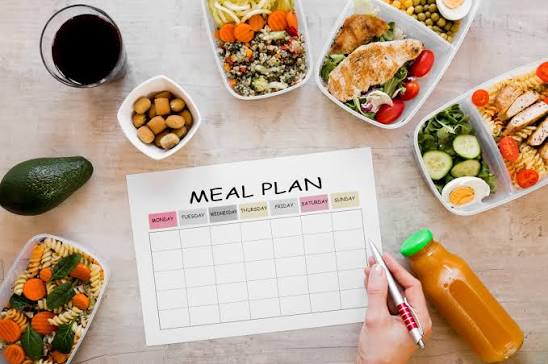
The Biggest Time Advantage of Meal Planning: Batch Work
Batch cooking changes the time equation. Imagine preparing four separate dinners that each require 40 minutes. Cooking them individually could require nearly three hours of active preparation across the week. Instead, you could spend 90 minutes on one larger cooking session, prepare several components together, and assemble meals later.
The same principle applies to grocery shopping. One organized weekly trip is generally more efficient than several smaller trips prompted by “What should we make tonight?”
Meal planning therefore works best when it is treated as a system, not simply a list of recipes. The more meals you can build around overlapping ingredients, leftovers, and prepared components, the less repetitive work you create.
But Meal Planning Has a Hidden Cost
Planning itself takes time. You have to decide what to make, account for different preferences, check ingredients, think about portions, and adjust the schedule when plans change. This can become particularly noticeable when every member of a household wants something different.
A meal plan can also fail to save time if it is overly ambitious. Choosing seven complicated recipes because they look appealing on Sunday may create hours of preparation during a busy workweek. In other words, meal planning only saves time when the plan is realistic.
A simple meal prepared efficiently is usually more useful than an elaborate recipe that requires several specialty ingredients and multiple cooking steps.
How Much Time Does Meal Delivery Remove?
Meal delivery approaches the problem from the opposite direction. Instead of making the entire process more efficient yourself, you pay for some of the work to be handled externally. But not all meal delivery services save the same amount of time.
Meal Kits
Meal kits generally provide pre-portioned ingredients and instructions. They can eliminate grocery shopping and reduce some preparation work. However, you still need to cook.
You may still have to chop vegetables, use pans and utensils, follow the recipe, and clean up afterward. For someone who enjoys cooking but dislikes grocery shopping and recipe planning, this can be a useful middle ground.
Prepared Meals
Prepared meal services go further. Meals arrive already cooked and generally need only to be reheated and served. This can dramatically reduce active kitchen time.
Instead of spending 30 to 60 minutes preparing dinner, you may spend only a few minutes heating it. The shopping, ingredient preparation, cooking, and much of the cleanup associated with cooking from scratch have already been handled. That is where meal delivery has its strongest time advantage.
Meal Planning vs Meal Delivery: The Time Breakdown
The difference becomes easier to see when the tasks are placed side by side.
| Task | Meal Planning | Meal Delivery |
| Choosing meals | You handle it | Usually still required |
| Grocery shopping | Required | Usually eliminated |
| Measuring ingredients | Required | Eliminated or reduced |
| Chopping/prep | Required | Reduced or eliminated |
| Cooking | Required | Reduced or eliminated |
| Kitchen cleanup | Required | Reduced, depending on service |
| Food storage | You manage leftovers | You manage delivered meals |
| Delivery management | Not required | Required |
This comparison reveals an important point: meal delivery does not eliminate meal-related work completely.
You still have to choose meals, receive the order, store the food, and manage your schedule around deliveries. But it can eliminate several time-consuming physical tasks at once.
Where Meal Delivery Clearly Wins
Nutrisystem Meal delivery has the biggest advantage when time is scarce during the hours when meals need to be prepared. Consider someone who works until 6:30 p.m., commutes home, and has only a small window between arriving home and eating dinner.
Even if that person enjoys cooking, spending another 45 minutes preparing food may be difficult. A prepared meal changes the evening schedule. Instead of starting with raw ingredients, dinner starts with something that is already ready to heat.
The benefit is even greater on unpredictable days. If a meeting runs late or a family commitment changes the evening schedule, a prepared meal requires very little adjustment. There is no need to stop at the grocery store or abandon ingredients that were supposed to be cooked that night. For people whose biggest problem is weekday time, delivery can provide a substantial advantage.

Where Meal Planning Can Beat Delivery
Meal planning can win when the household has predictable routines and is willing to batch its work. Suppose you shop once a week, already know several quick meals, and regularly use leftovers. Your grocery trip is efficient, and cooking can be concentrated into a few sessions. In that situation, meal delivery may not save much additional time.
There is also the fact that delivery still requires coordination. You may need to select meals in advance, change your order, receive the package, refrigerate or freeze meals, and deal with packaging. For someone who already has an efficient home-cooking system, those additional steps may offset some of the convenience.
Meal planning also provides more flexibility. If you already have ingredients at home, you can change dinner plans without worrying about whether a delivered meal fits your preferences that day.
You can see the current plans on its official site:
A Realistic Weekly Example
Consider two adults with full-time jobs who eat dinner at home five nights a week. With meal planning, they might spend around 30 minutes planning meals and creating a grocery list, about an hour shopping, and several hours cooking across the week.
But those cooking hours do not have to be spread evenly. They could spend 90 minutes on Sunday preparing several ingredients and then assemble quick dinners on workdays. Now consider the same household using prepared meal delivery.
Meal selection might take 15 to 20 minutes each week. Grocery shopping is largely removed. Weeknight cooking may fall to a few minutes per meal, although meals still need to be stored, reheated, and cleaned up after. The delivery approach is likely to save more active weekday time.
The meal-planning approach may still require more total hands-on work, but some of it happens at a convenient time rather than during the busiest part of the day. That distinction matters. A person may prefer spending 90 minutes preparing food on Sunday if it gives them easier evenings from Monday through Thursday.
Don’t Ignore the Mental Load
Time is not only measured with a stopwatch. Repeatedly deciding what to eat can create decision fatigue. The same applies to remembering which ingredients are running out, determining what needs to be cooked first, and figuring out how to use food before it spoils.
Meal planning addresses this by making decisions in advance. Nutrisystem Meal delivery addresses it by reducing the number of decisions required to turn ingredients into dinner. This is why two people can spend roughly similar amounts of physical time on meals but experience very different levels of convenience.
For someone who finds cooking relaxing, meal preparation may not feel like a burden. For someone who sees dinner as another task after an already demanding day, eliminating that task can be significantly more valuable.
The Most Time-Efficient Option May Be a Hybrid
There is no rule saying you have to choose one method for every meal. A hybrid approach can capture the strongest time-saving features of both. For example, you could meal-plan breakfasts and lunches, batch-cook several dinner components on the weekend, and use prepared meals for the two busiest nights of the week.
Another approach is to use meal kits when you want to cook but do not want to shop, while relying on simple planned meals for the rest of the week. This can also prevent over-relying on delivery. Instead of paying to outsource every meal, you are using delivery specifically where it has the greatest value: on days when your available time is limited.
So, Which Saves More Time?
If the comparison is strictly about reducing hands-on food preparation, prepared meal delivery usually wins. It can remove grocery shopping, ingredient preparation, cooking, and much of the cleanup involved in making a meal from scratch.
But meal planning can be the more efficient long-term system for households that cook regularly. Batch preparation, ingredient overlap, leftovers, and one organized shopping trip can substantially reduce the time required to manage meals throughout the week.
The real deciding factor is therefore not whether you prefer meal planning or meal delivery in theory. It is where your time is currently being lost. If grocery shopping and cooking are eating into your evenings, delivery can address those specific problems. If your biggest issue is deciding what to cook and repeatedly making small shopping trips, a well-designed meal plan may be enough.
And if both are problems, combining the two may provide the best balance. Meal planning saves time through organization and repetition. Meal delivery saves time through outsourcing. The better option is the one that removes the part of the meal process that creates the biggest time burden in your week.







Leave feedback about this