

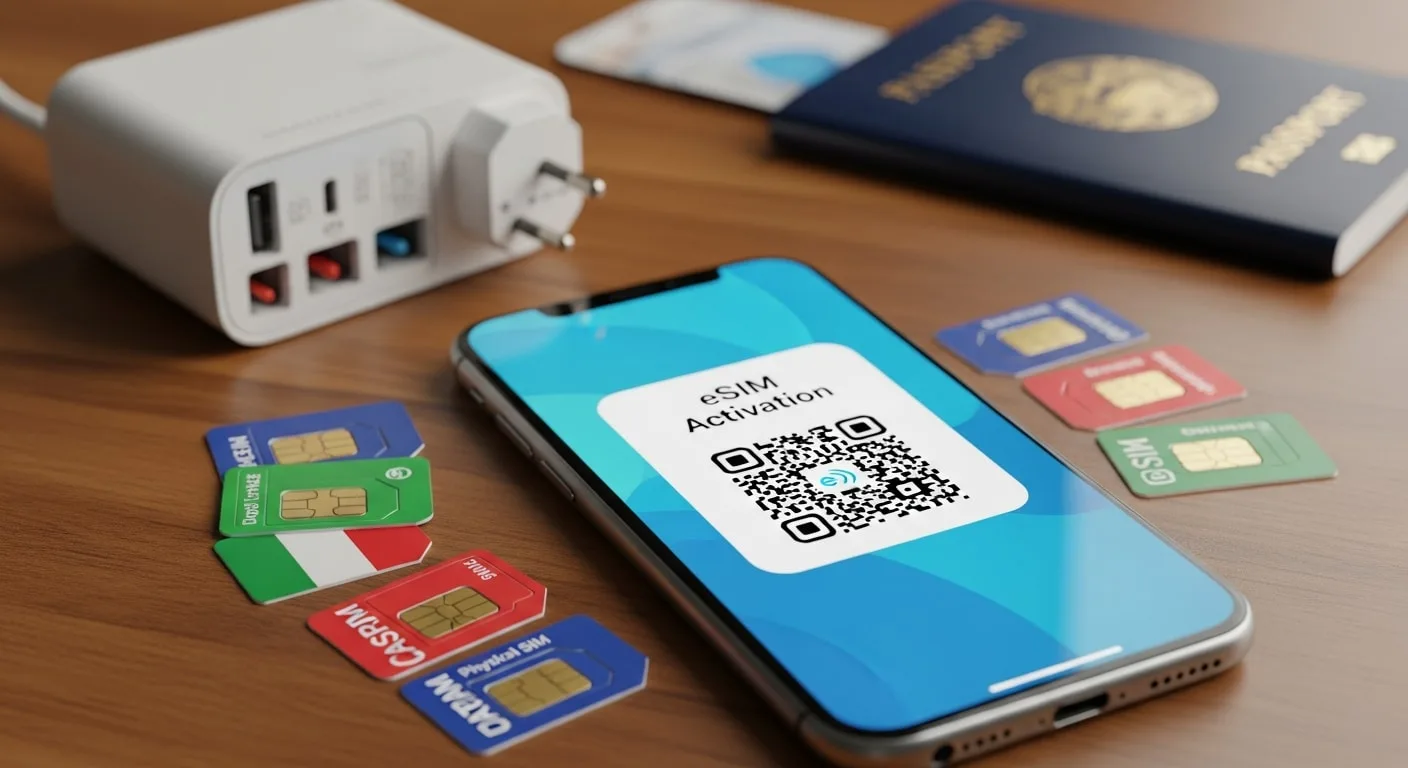
Staying connected while traveling internationally usually comes down to two options: using your existing mobile carrier through international roaming or getting a travel eSIM for your destination. Both options allow you to use mobile data abroad, but they work differently.
International roaming keeps your regular mobile plan active and connects it to a partner network in another country. A travel eSIM gives you a separate digital mobile plan that you can install on a compatible phone before or during your trip.
The difference can affect how much you pay, how you manage your data, whether you can keep your regular number active, and how much setup is required.
eSIM vs International Roaming at a Glance
| Feature | Travel eSIM | International Roaming |
| Uses your existing mobile plan | No | Yes |
| Requires an eSIM-compatible phone | Yes | No, if your existing SIM supports roaming |
| Physical SIM replacement | No | No |
| Separate travel data plan | Yes | Usually no |
| Pricing | Usually prepaid by destination, data, and validity | Depends on your mobile carrier and roaming package |
| Local/regional plans | Often available | Depends on carrier |
| Data control | Usually fixed by selected plan | Depends on carrier plan |
| Keep your regular number | Yes, on compatible dual-SIM phones | Yes |
| Traditional calls and SMS | Usually data-only, unless included separately | Usually available through your carrier |
| Installation | Digital setup required | Usually minimal |
| Carrier compatibility | Phone must be unlocked | Works with your existing carrier |
| Multiple countries | Regional/global plans may be available | Depends on carrier agreements and roaming package |
| Top-ups | Available on supported plans | Depends on carrier |
| Best suited to | Travelers wanting a separate prepaid connection | Travelers who want to keep their existing mobile service |
The main distinction is simple: international roaming extends your existing mobile service abroad, while a travel eSIM provides a separate mobile plan for your trip.
What Is International Roaming?
International roaming allows your regular mobile carrier to provide service when you are outside the carrier’s normal domestic coverage area. When you arrive in another country, your phone can connect to a local network through an agreement between your home carrier and that network. Your phone continues using your existing SIM and mobile number.
For example, if you normally use a mobile plan in India and travel to France, your Indian carrier may allow your phone to connect to a French partner network. Calls, SMS, and mobile data can then work through the roaming arrangement.
The exact cost depends on your carrier and the roaming package you choose. Some carriers offer international roaming packs with a fixed allowance, while others may charge according to usage.
This means checking your carrier’s international roaming terms before departure is important. Without an appropriate package, mobile data usage abroad can result in additional charges.
What Is a Travel eSIM?
An eSIM is a digital SIM built into a compatible device. Instead of inserting a physical SIM card, you download a mobile plan directly to the device. A travel eSIM is specifically designed for use outside your home country.
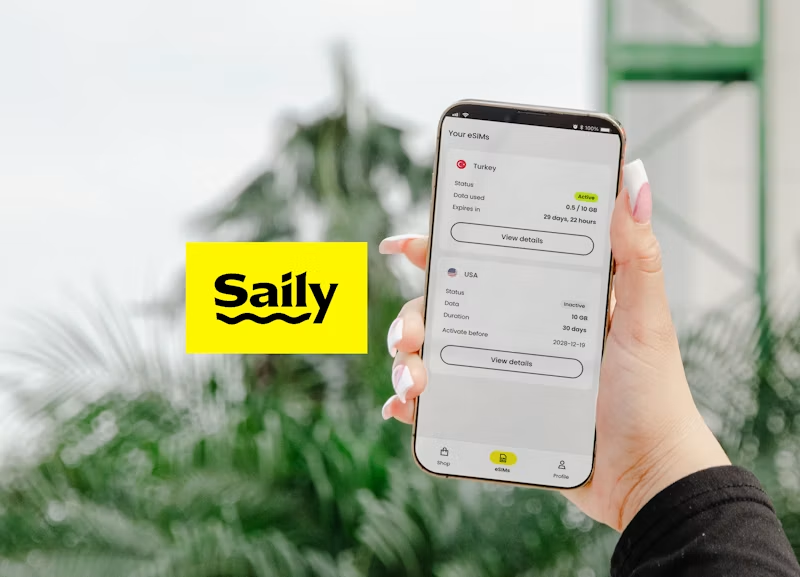
Providers such as Saily offer prepaid data plans for more than 200 countries and regions, allowing travelers to select a destination and purchase a plan before traveling. The eSIM can be installed while you still have an internet connection at home.
Once you arrive at the destination, you can select the travel eSIM for mobile data and connect to a supported local network. This gives you a separate connection from your regular mobile plan.

How Does International Roaming Work?
International roaming generally follows these steps:
- Check whether your mobile carrier supports roaming in your destination.
- Choose an international roaming package if one is available.
- Activate the roaming service according to your carrier’s instructions.
- Arrive at your destination and connect to a partner network.
- Use calls, SMS, and mobile data according to the roaming package or standard roaming rates.
The advantage is that there is usually little technical setup. Your existing SIM and phone number continue to work. The downside is that pricing, data allowances, and supported destinations are determined by your home carrier.
How Does a Travel eSIM Work?
A travel eSIM follows a different process.
First, you check that your phone supports eSIM technology and is not carrier-locked. You then select a plan based on your destination, data requirements, and travel duration.
The eSIM can usually be purchased and installed before departure. Saily, for example, allows users to install its eSIM through the app and recommends completing the setup before traveling.
After arriving, you can select the travel eSIM for mobile data. Depending on the provider and plan, data roaming may need to be enabled for the travel eSIM itself. This does not mean you are paying your home carrier’s roaming rate. The data connection is being provided through the travel eSIM plan.
eSIM vs International Roaming: The Main Differences
The two options can look similar because both connect your phone to a mobile network abroad. However, several important differences affect the overall travel experience.
1. Your Existing Mobile Plan
With international roaming, your existing mobile plan remains the primary service. You use the same SIM and phone number while abroad.
With a travel eSIM, you purchase a separate mobile plan. Your home SIM can remain in the phone if your device supports dual-SIM functionality.
This can be useful when you want to keep receiving important messages or calls on your regular number while using the travel eSIM for data.
2. Pricing Structure
International roaming prices depend on your mobile carrier. Some providers offer daily roaming passes, while others offer packages with specific data, call, and SMS allowances.
Travel eSIMs generally use prepaid pricing. You select a plan based on destination, data allowance, and validity period and pay for it before using the service.
The actual price difference varies by destination and carrier, so there is no universal price comparison. A traveler should compare the complete cost of the roaming package with the price of a suitable eSIM plan for the same trip.
3. Data Control
A travel eSIM can make data usage easier to budget because the selected plan normally specifies how much data is included and how long it remains valid. For example, you might choose a plan with a fixed data allowance for a seven-day trip.
International roaming can work differently depending on the carrier. You may receive a fixed roaming allowance, a daily package, or usage-based billing.
If avoiding unexpected charges is a priority, check exactly what happens when the included roaming allowance runs out.
4. Phone Number
International roaming allows you to keep using your existing phone number because you are still using your regular mobile service. A standard travel eSIM is often data-focused and may not provide a traditional phone number. Calls and messages can instead be made through internet-based apps such as WhatsApp, FaceTime, Messenger, or Signal.
Some eSIM providers also offer separate voice and SMS options. Saily, for example, offers an optional US-based phone number add-on alongside its data eSIM.
If receiving calls or SMS on your usual number is important, keeping your primary SIM active alongside the travel eSIM can be useful, provided your device supports dual-SIM use and you configure the data line correctly.
5. Setup
International roaming generally requires less setup. Once the roaming service is active with your carrier, your existing SIM can connect when you arrive abroad.
A travel eSIM requires an initial installation. You need an eSIM-compatible, unlocked phone and an internet connection for the initial installation. The setup is digital, so there is no physical SIM card to buy or replace.
6. Coverage
Roaming coverage depends on the agreements your home carrier has with mobile networks in different countries.
Travel eSIM providers can offer country-specific, regional, or global plans. Saily currently offers plans in more than 200 countries and regions, while Airalo also provides local, regional, and global options across 200+ locations.
However, travelers should always check the exact destination and network coverage of the specific plan before purchasing.
7. Multiple-Country Trips
International roaming can be convenient for a short trip to one country, but multi-country travel requires checking whether your carrier’s roaming package covers every destination. Travel eSIM providers may offer regional or global plans that cover multiple countries under one package.
For example, someone traveling through France, Italy, Switzerland, and Spain can look for a regional European eSIM rather than purchasing a separate local plan for every country. The exact countries included vary by provider and plan, so the coverage list matters more than simply choosing a plan labeled “Europe” or “Global.”
8. Top-Ups and Additional Data
With a travel eSIM, additional data can often be purchased if you use your allowance before the plan expires. Saily allows users to add data through the app when supported by the plan. Airalo similarly offers top-ups for eligible eSIMs.
With international roaming, additional data is handled by your mobile carrier. You may need to purchase another roaming pack or pay according to your carrier’s standard terms. Check the top-up conditions before your trip if you expect heavy data usage.
eSIM vs International Roaming: Cost Comparison
Cost is often the first reason travelers compare these two options, but the comparison should include more than the headline price.
| Cost factor | Travel eSIM | International Roaming |
| Initial cost | Usually prepaid plan price | Depends on carrier |
| Billing model | Usually fixed for selected plan | Daily, package-based, or usage-based |
| Data allowance | Defined by selected eSIM plan | Defined by roaming package or carrier |
| Extra data | Top-up on supported plans | Additional carrier package or charges |
| Multiple destinations | Regional/global plans may cover several countries | Depends on carrier package |
| Risk of unexpected charges | Lower when using only prepaid eSIM data | Depends on carrier settings and plan |
A travel eSIM is not automatically cheaper in every situation. A very short trip may be reasonably priced through an existing carrier roaming pass, while a longer or multi-country trip may make a prepaid travel eSIM more attractive. The useful comparison is the total cost for your specific destination, duration, and data requirements.
eSIM vs International Roaming for Calls and Texts
Calls and SMS require special consideration because many travel eSIMs are primarily designed for data. If you use international roaming, your regular mobile number remains active. Depending on your carrier and roaming package, you can continue making and receiving traditional calls and SMS.
With a data-only eSIM, traditional cellular calls and SMS may not be included. Instead, you can use internet-based communication services.
For travelers who mostly communicate through messaging apps, this may not be a major difference. However, if you need your regular number for banking OTPs, business calls, reservations, or other important communications, check how your primary SIM will work while abroad.
Can You Use an eSIM and International Roaming Together?
Yes, on compatible dual-SIM devices, you can use your home SIM and a travel eSIM at the same time. This can be useful because each line can serve a different purpose. For example:
- Your primary SIM can remain available for calls and SMS.
- The travel eSIM can handle mobile data.
- Your phone can be configured so mobile data comes only from the travel eSIM.
- Data roaming can be disabled on your primary SIM to reduce the risk of accidental roaming charges.
Saily specifically recommends disabling the personal or primary SIM and mobile data switching when using its eSIM to prevent the home line from connecting to mobile data abroad. The exact settings vary by phone, so check your device’s dual-SIM controls before departure.
Which Option Is Easier to Set Up?
If simplicity means making the fewest changes to your phone, international roaming has an advantage. Your existing SIM and mobile service remain in place, and there is generally no need to install another mobile plan.
A travel eSIM involves a few additional steps, including checking device compatibility, purchasing a plan, installing the eSIM, and selecting it for mobile data.
However, once installed, the eSIM can be ready before you leave home. This means you do not need to search for a local SIM shop immediately after landing. For travelers who are comfortable changing SIM settings, the setup is usually straightforward.
Which Option Works Better for Different Travel Situations?
There is no single connectivity option that fits every trip. The better match depends on what you need from your mobile service.
| Travel situation | Option to consider | Why |
| One-day or very short trip | International roaming or eSIM | Compare the total cost and setup |
| Week-long vacation | Travel eSIM or roaming package | Compare data allowance and price |
| Multi-country trip | Regional travel eSIM | One plan may cover several destinations |
| Frequent international travel | Travel eSIM | Multiple prepaid plans can be managed digitally |
| Need your regular number | International roaming or dual-SIM setup | Keeps your primary line available |
| Heavy mobile data use | Compare large eSIM and roaming packages | Data allowance becomes more important |
| Business travel | Either, depending on calls and data needs | Consider number access, hotspot, and data |
| Want minimal setup | International roaming | Uses your existing mobile service |
| Want a separate prepaid data budget | Travel eSIM | Data is purchased separately |
These are practical considerations rather than fixed rules. The actual plan terms, destination, device, and carrier can change which option makes more sense for a particular trip.
How to Choose Between an eSIM and International Roaming
Before deciding, ask these questions:
Where Are You Traveling?
Check whether your carrier offers roaming in every country on your itinerary. For an eSIM, check whether the specific plan covers every destination you need.
How Long Will You Stay?
Compare the total cost for the entire trip rather than looking only at the daily price.
How Much Data Will You Use?
Maps and messaging generally use less data than video calls, streaming, social media uploads, or remote work.
Do You Need Your Regular Number?
If calls and SMS to your usual number are important, check your carrier’s roaming terms or consider a dual-SIM setup with your primary line and travel eSIM.
Does Your Phone Support eSIM?
A travel eSIM requires a compatible device. The phone must also generally be carrier-unlocked for a third-party eSIM to work.
Do You Want a Fixed Travel Budget?
A prepaid eSIM can make it easier to separate your travel data spending from your regular mobile bill.
How to Set Up a Travel eSIM Before Your Trip
If you decide to use a travel eSIM, setting it up before departure can make the arrival process easier.
Check compatibility: Confirm that your phone supports eSIM and is carrier-unlocked.
Choose a plan: Select a country, regional, or global plan according to your itinerary.
Install the eSIM: Use the provider’s app or installation instructions while connected to the internet.
Keep your primary SIM available if needed: If you want access to your regular number, keep your home SIM active but configure your phone carefully.
Set the travel eSIM as the data line: Select the travel eSIM for mobile data when you arrive.
Disable data switching: Turn off automatic mobile data switching if your phone has this option.
Check roaming settings: If the travel eSIM requires data roaming to connect, enable it for that eSIM only. Keep data roaming disabled on your primary line if you want to avoid accidental carrier roaming.
Saily’s current setup instructions specifically recommend installing the eSIM before travel and disabling the primary SIM or mobile data switching on arrival to prevent unexpected roaming charges.
Common Mistakes to Avoid
Even when using a travel eSIM, a few settings can lead to unexpected charges or connectivity problems.
Leaving Mobile Data on the Primary SIM
If your home SIM remains selected for mobile data, your phone may use your carrier’s roaming service instead of the travel eSIM.
Leaving Automatic Data Switching Enabled
Some phones can automatically switch between SIMs for data. Disable this feature if you want to make sure your travel eSIM is the only data line being used.
Buying an eSIM Without Checking Coverage
A plan can be labeled as regional or global while still having specific country exclusions. Always check the included destinations.
Forgetting About Data Usage
A travel eSIM does not mean unlimited data unless the selected plan specifically provides it. Video streaming, cloud backups, social media uploads, and hotspot use can consume data quickly.
Installing the eSIM Without Internet Access
The initial eSIM installation requires an internet connection. Installing it before departure while connected to reliable Wi-Fi can make the process easier.
Final Thoughts
The difference between a travel eSIM and international roaming mainly comes down to how your mobile connection is provided. International roaming extends your existing carrier service to another country. It is convenient because you can keep using your regular SIM and phone number, but the price and coverage depend on your mobile carrier and its roaming arrangements.
A travel eSIM provides a separate mobile plan that is installed digitally on a compatible phone. It offers more control over how much data you purchase and can be useful for multi-country travel when regional or global plans are available.
For some travelers, keeping the primary SIM for calls and SMS while using a travel eSIM for data can combine the advantages of both approaches. Before your trip, compare the destination coverage, total cost, data allowance, validity, calls and SMS requirements, and device compatibility. That gives you a clearer picture of which connectivity setup fits your particular trip.







Leave feedback about this