

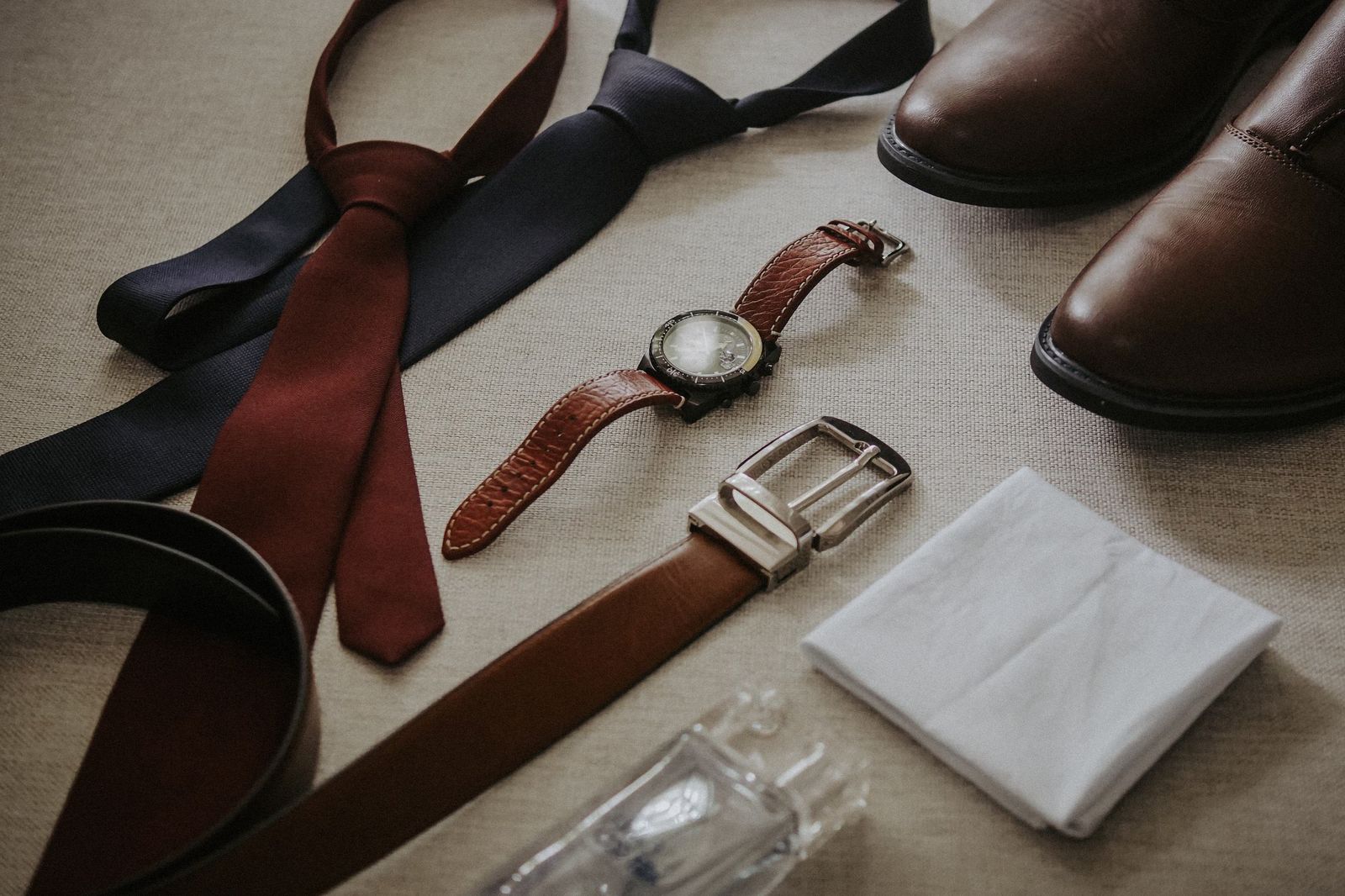
A suit does most of the talking, but the tie decides whether the outfit looks deliberate or accidental. A well-chosen tie sharpens a plain shirt, ties together colors and signals that you paid attention to the details. A poorly chosen one, too wide, too shiny or clashing with the jacket, can undermine an otherwise excellent suit. Learning how to choose a tie for a suit is therefore one of the most useful style skills a man can develop, and it is easier than most people assume.
This guide is written for American readers who wear suits for work, weddings, interviews and special occasions. We explain how to match tie width to your lapels, which fabrics suit which settings, how to pick colors and patterns that work with your shirt and jacket, and how to care for ties so that they last. It is general styling advice, so adapt it to your build, your industry and your personal taste.
Throughout the article we use the phrases tie width guide, silk vs knit tie and matching tie to suit color to describe the three decisions that matter most. Once you understand those, shopping for ties becomes quick and predictable, whether you buy online or in a store.
Ties are often bought for specific occasions, so it helps to think about the event first. Our guide to choosing a wedding guest outfit for different dress codes explains how formality levels shape what you wear, and the same logic applies when you pick a tie for a ceremony, a dinner or a business meeting.
Start With the Occasion and Dress Code
Before you consider color or pattern, decide how formal the setting is. A boardroom presentation, a black-tie wedding and a casual Friday office day each call for a different tie. Matching formality prevents the most common mistake: wearing a tie that is either too relaxed or too dressy for the event.
As a rule, smooth silk ties in solid colors or subtle patterns suit the most formal settings. Textured or knit ties work well for business casual and creative offices. Bold patterns, novelty designs and bright colors fit social events and informal gatherings, provided the rest of the outfit stays restrained.
Quick Formality Guide
- Very formal (weddings, galas): Solid or small-pattern silk in dark or muted tones.
- Business (interviews, meetings): Navy, charcoal, burgundy or subtle stripes in silk or wool blends.
- Business casual: Knit, grenadine or textured ties in medium tones.
- Social and creative: Patterns, florals or bold colors, balanced with a simple shirt.
Tie Width: Matching Your Lapels and Build
Tie width is the detail most people overlook, yet it affects proportion more than any other factor. The simple principle is that the widest part of your tie should roughly echo the width of your jacket lapels. A narrow tie with wide lapels looks undersized, while a wide tie with slim lapels looks heavy.
Most modern ties fall into three broad categories: skinny, standard and wide. A standard width is the safest choice for most men, because it works with a wide range of suits and never looks dated. Skinny ties suit slim lapels and a trimmer build, while wider ties suit traditional, broader-lapel suits and taller or larger frames.
| Tie Width | Best With | Best For |
|---|---|---|
| Skinny | Slim lapels, modern cuts | Trim builds, fashion-forward settings |
| Standard | Average lapels, most suits | Everyday business and formal wear |
| Wide | Broad lapels, classic cuts | Taller or broader builds, traditional looks |
Use the table as a starting point and try ties on with the suit you plan to wear. Check the length too: the tip should reach the top of your belt buckle, neither above it nor hanging below.
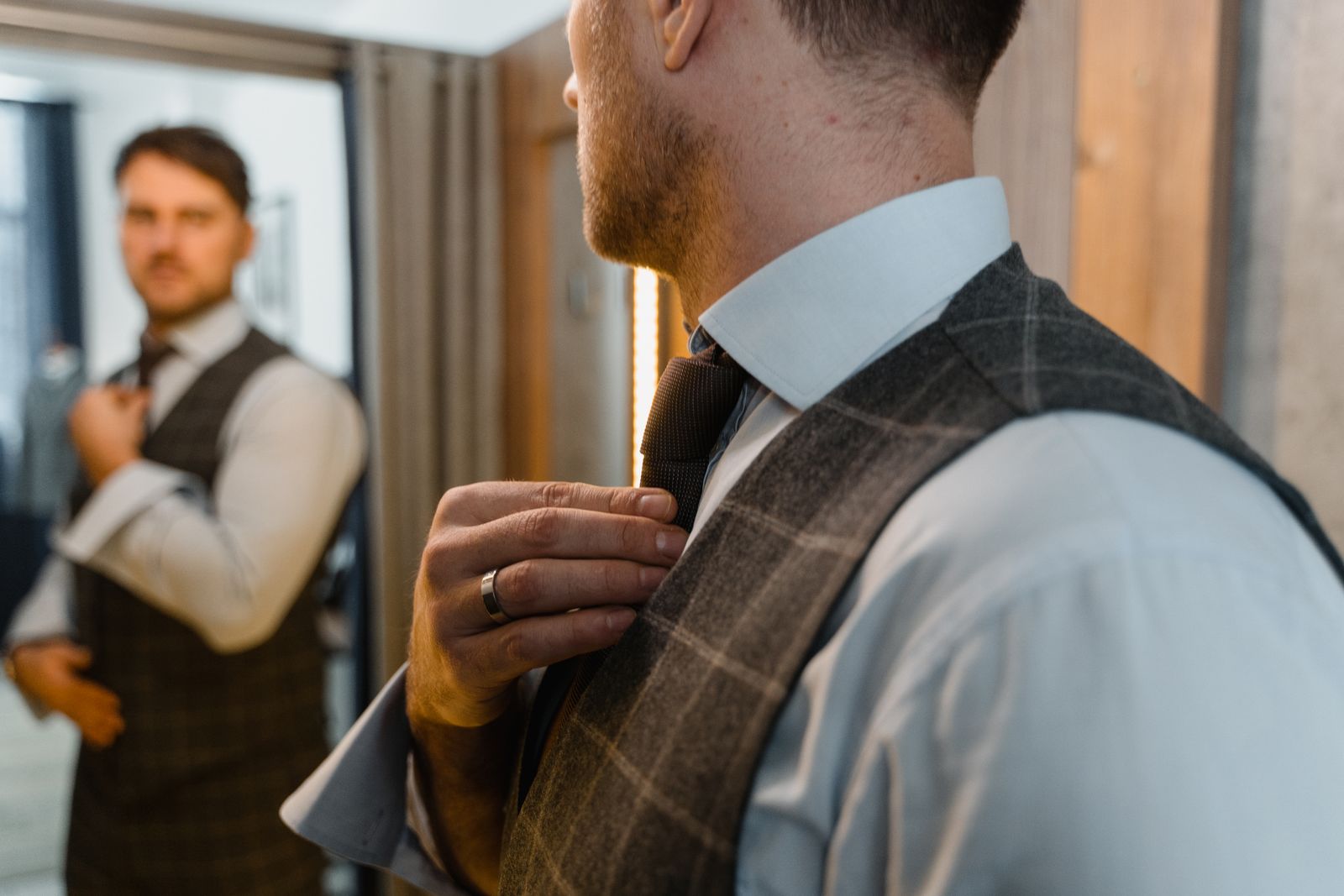
If your wardrobe is built around a small set of versatile pieces, ties follow the same logic. Our article on choosing a quality men’s button-up shirt by fabric and fit shows how collar shape and shirt texture affect which ties look best.
Silk vs Knit Tie: Choosing the Right Fabric
Fabric changes both the look and the formality of a tie. Silk is the classic choice for business and formal wear, because it drapes smoothly, holds a knot well and has a subtle sheen. Knit ties are woven in a looser structure with a flat end, which gives a textured, relaxed appearance that suits business casual outfits and sports jackets.
Other fabrics include wool, cotton, linen and blends. Wool and cashmere add warmth and texture for autumn and winter, while cotton and linen feel lighter for summer weddings and outdoor events. Grenadine, a loosely woven silk, has a distinctive texture that sits between formal and casual.
What to Check When You Buy
Pinch the tie between your fingers: a well-made tie feels substantial without being stiff. Look for even stitching down the back, a neat loop to keep the tail in place and fabric that returns to shape when you gently press it. A thin, flimsy interlining tends to twist and wrinkle quickly.
Matching Tie to Suit Color: A Practical Approach
Color matching does not need to be complicated. The easiest method is to choose the tie and shirt together, then check how both look against the suit. Contrast adds interest, while too little contrast makes an outfit look flat.
Navy Suits
Navy is the most versatile suit color. It pairs well with burgundy, forest green, grey, silver and muted gold ties, and it suits both solid and patterned designs. A white or light blue shirt keeps the look clean and professional.
Charcoal and Grey Suits
Grey suits welcome a wide range of colors, including navy, burgundy, purple, pink and soft blues. Because grey is neutral, you can use the tie to introduce personality without overpowering the outfit.
Black and Dark Suits
Black suits are best reserved for formal evening events. Pair them with black, silver, deep red or subtle patterned silk ties. Avoid overly bright colors, which can look jarring against black.
Patterns and Shirt Combinations
When mixing patterns, vary the scale. A fine-striped shirt works with a wider-striped or dotted tie, but two patterns of the same size will compete. If you are unsure, pair a patterned tie with a plain shirt, or a patterned shirt with a solid tie.
Where The Tie Bar Fits Into Your Shopping
If you want a retailer focused on ties, bow ties, pocket squares and accessories, one option to explore is The Tie Bar, which offers a wide range of colors, widths and fabrics. When you browse The Tie Bar, use the guidance above: check the stated width against your lapels, look at the fabric description and compare colors against your most-worn suits.
Ties are easy to buy and easy to regret, so build a small core collection first. A navy tie, a burgundy tie, a charcoal or grey tie and one subtle pattern cover most occasions. If you are building a larger, more cohesive wardrobe, our guide to building a practical capsule wardrobe for work explains how to choose pieces that mix and match without effort.
Pros and Cons of Different Tie Styles
Silk ties: Pros include a refined look, good drape and suitability for formal settings. Cons include higher cost and sensitivity to stains and creasing.
Knit ties: Pros include texture, a relaxed look and good wrinkle resistance. Cons include being less formal and sometimes bulkier knots.
Wool and cotton ties: Pros include seasonal comfort and a distinctive texture. Cons include a more casual appearance and less suitability for black-tie events.
How to Care for Your Ties
Good ties can last for years if you treat them properly. Untie them after each wear rather than pulling the knot loose, which stretches the fabric. Hang them or roll them loosely, avoid direct sunlight and spot-clean rather than washing. For deep stains, consult a professional dry cleaner who handles silk. Rotating between ties also reduces wear and keeps each one looking fresh.
FAQ
Q1: What tie width is best for most men?
A standard width is the safest choice, because it works with most lapel sizes and body types. Match the widest part of the tie to your lapel width for balanced proportions.
Q2: Should my tie be darker or lighter than my shirt?
As a general guideline, the tie should be at least as dark as the shirt, which keeps the focus on the tie. Contrast between the shirt and tie is more important than following a strict rule.
Q3: Can I wear a knit tie with a suit?
Yes, especially in business casual settings or with textured suits. For very formal events, a smooth silk tie is a safer choice.
Q4: How long should a tie be?
The tip of the tie should reach the top of your belt buckle. If the tie is noticeably shorter or longer, adjust the knot or try a different length.
Conclusion: Small Details, Big Impact
Knowing how to choose a tie for a suit comes down to three decisions: width that matches your lapels, fabric that fits the occasion and colors that complement your suit and shirt. Get those right and your tie will look intentional every time.
Start with a small collection of versatile ties, add a few patterned options and look after them properly. If you want a dedicated source to compare widths and fabrics, consider browsing The Tie Bar alongside other retailers. A thoughtful tie costs little but changes the whole outfit.







Leave feedback about this