

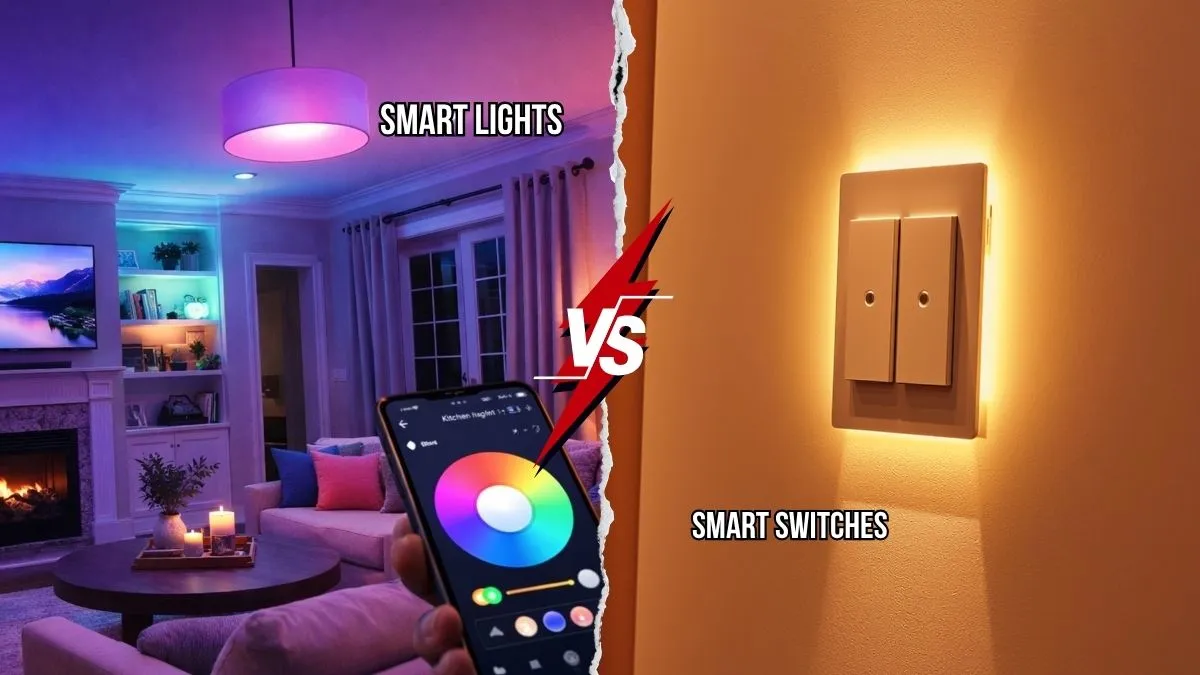
What most homeowners planning to make a smart home in 2026 usually do first is upgrade the lighting. However, this can quickly lead to the question: Is it better to get smart bulbs or smart switches? The discussion revolves around smart lights vs smart switches, and it is not limited to features only, but also long-term value, convenience, and lifestyle.
On top of AI in-home automation, smarter ecosystems like Matter, and the idea of smart lighting being used mainly for energy saving, picking the right one has become more complicated than ever. Here is the clearly explained breakdown for you to make a wise investment decision.
Understanding Smart Lights (Smart Bulbs)
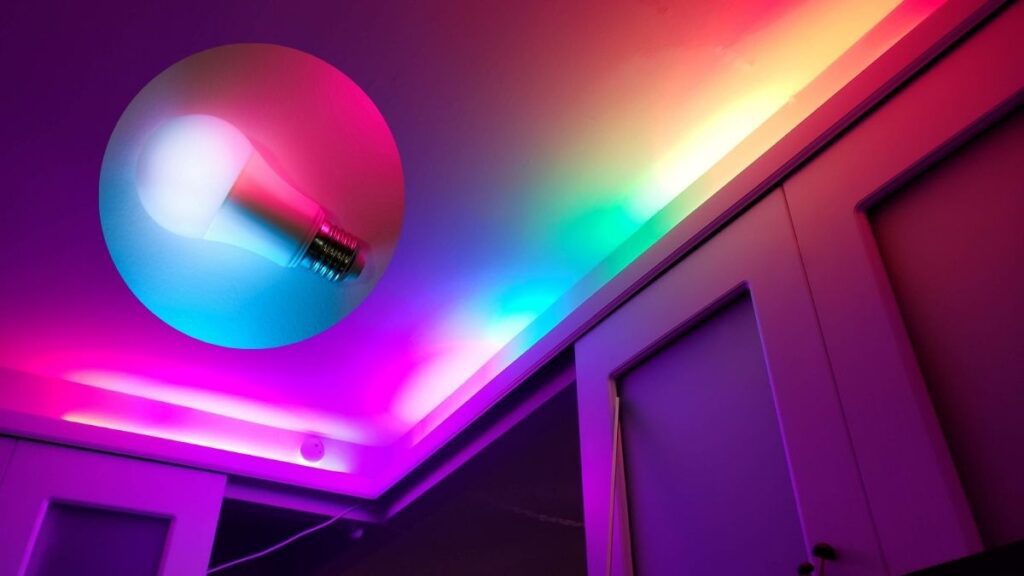
Smart lights are essentially wirelessly networked light bulbs for your home, which you can control using apps, voice assistants, or by setting up automations. Because of their simplicity of setup, you simply replace the existing fixture’s bulb with a smart one. They are often considered the best smart lights for the home.
Key Benefits of Smart Lights
- Easy installation: No wiring required, perfect for renters or beginners
- Advanced customization: Adjust brightness, color, and temperature
- Scene creation: Set moods like “movie night” or “focus mode”
- Voice & app control: Works with Alexa, Google Home, and Apple HomeKit
- Energy tracking: Many models now show real-time energy usage
Smart bulbs also integrate seamlessly into AI-powered home automation, enabling routines like gradually brightening lights in the morning or dimming them at night.
Limitations of Smart Lights
- If someone turns off the wall switch, the bulb loses power and becomes “dumb.”
- Can become expensive if you need multiple bulbs in one room
- Limited control over multiple fixtures unless grouped in apps
Understanding Smart Switches
Smart switches are the perfect upgrade to your old-fashioned wall switches, as they manage the power supply to the light fixtures. They don’t just control the bulbs but the whole circuits, which means that one switch can operate several lights simultaneously.
Key Benefits of Smart Switches
- Whole-room control: Ideal for kitchens, living rooms, and hallways
- Always functional physically: Works like a normal switch for anyone in the house
- Reliable automation: No risk of losing connectivity due to manual switch-off
- Cost-effective for larger setups: One switch vs multiple bulbs
Smart switches are often preferred in permanent homes where consistency matters more than customization.
Limitations of Smart Switches
- Installation can require electrical knowledge or an electrician
- No color-changing or advanced lighting effects
- May need a neutral wire (common in US homes but not universal)
Smart Lights vs Smart Switches: Core Differences
Here’s a simplified comparison to help you quickly understand the trade-offs:
| Feature | Smart Lights | Smart Switches |
| Installation | Plug-and-play | Requires wiring |
| Control | Individual bulbs | Entire circuit |
| Customization | High (colors, scenes) | Limited (on/off, dimming) |
| Cost (large rooms) | Higher | Lower |
| Reliability | Depends on switch position | Always Reliable |
| Ideal for | Apartments, aesthetics | Homes, practicality |
Which Option Saves More Energy?
When it comes to Smart lighting for energy savings, both options can be efficient, but in different ways.
Smart bulbs excel at:
- Dimming automatically based on time or occupancy
- Turning off when no one is present
- Tracking individual energy usage
Smart switches, on the other hand:
- Ensure lights are never accidentally left on
- Works better for multi-light setups (like recessed lighting)
- Reduce “standby waste” across multiple fixtures
Overall, both contribute to energy savings, but smart bulbs offer more granular control.
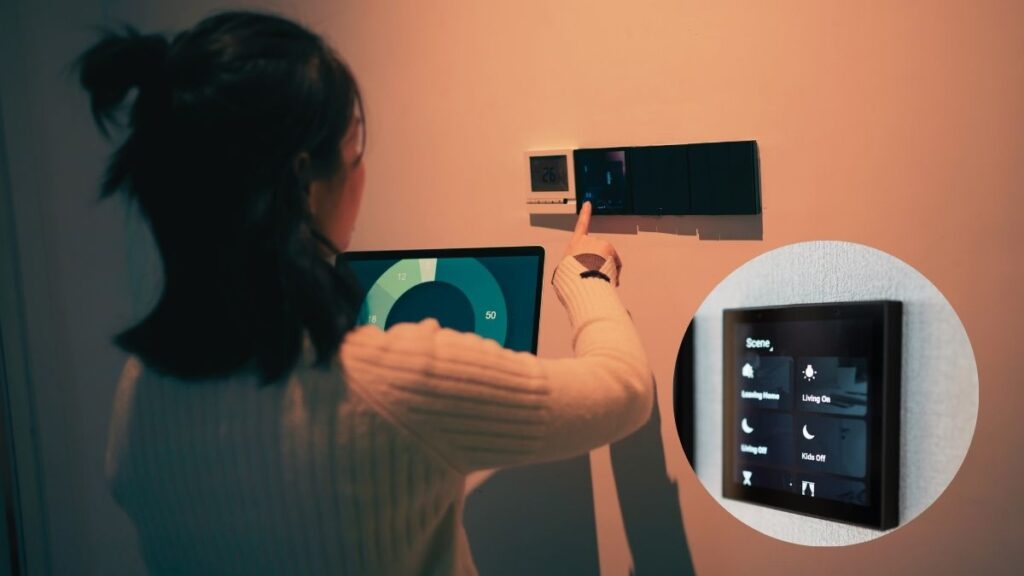
The Role of AI in Smart Lighting (2026 Trend)
One of the biggest shifts in 2026 is the integration of AI-powered home automation into lighting systems. Modern setups can now:
- Learn your daily routines and adjust lighting automatically
- Sync lighting with weather, time, or occupancy
- Integrate with other devices like thermostats and security systems
Smart bulbs tend to benefit more from AI because they offer more adjustable parameters (color, brightness, tone). However, smart switches provide a stable backbone for automation reliability.
Real-World Use Cases: What Actually Works Best?
Here’s where things get practical.
Choose Smart Lights If:
- You want aesthetic lighting (RGB, mood lighting, gaming setups)
- You live in a rental or don’t want wiring changes
- You’re building a visually dynamic smart home
- You want the best smart lights for a home experience
Choose Smart Switches If:
- You want a “set it and forget it” system
- Your household prefers physical controls
- You have multiple lights per room
- You want long-term reliability and lower maintenance
Installation and Compatibility Considerations in 2026
Before making a decision on smart bulbs vs switches, one should consider installation needs and the compatibility of their existing ecosystem. Smart lights usually come ready to use, so they are perfect for renters or individuals who do not want to do any electrical work.
On the other hand, smart switches might require a neutral wire and a person with a little knowledge of wiring, although practically all recent US homes will have such a setup. Compatibility is another aspect to consider. Make sure that your devices can work with platforms like Alexa, Google Home, or Apple HomeKit.
Thanks to the increasing availability of Matter-enabled devices in 2026, interoperability has been enhanced with a significant leap. However, doing a compatibility check before purchase is what guarantees an AI-enabled home automation system that is hassle-free and without any connectivity headaches.
Can You Use Both Together?
Yes, but carefully. Many advanced smart homes combine both:
- Smart switches for main lighting control
- Smart bulbs for accent or decorative lighting
If you don’t get the combination right, it can be problematic. This is the case, for instance, if you turn off a smart bulb with a switch, it will lose smart features completely. The smartest way is to use smart switches for main lighting and smart bulbs only where you want a lot of customization.
FAQs
Ans. Smart lights control individual bulbs with advanced features, while smart switches manage entire circuits, offering simpler and more reliable control.
Ans. Both cover energy saving with smart lighting, but smart lights give you detailed control, while switches help you avoid wasting energy in multiple fixtures.
Ans. Yes, that’s true, but to minimize connectivity and control issues, use smart switches for main lighting and smart bulbs for accent lighting.
Ans. Smart lights are simpler since no wiring is required. On the other hand, smart switches may require electrical knowledge or a professional installation.
Ans. Yes, both integrate with AI-powered home automation, but smart lights offer more customization through brightness, color, and scheduling adjustments.
Conclusion
The discussion of Smart Lights vs Smart Switches finally boils down to the way you live in your house. The technology of 2026 will not be about picking one versus the other. It will be about combining both intelligently. Thanks to newly evolving ecosystems such as Matter and smarter automation systems, your lighting arrangement must be ready for the future, energy-efficient, and customized to your way of life, and not simply the fashions. Probably, if you think about it strategically, the light in your home will not only be there to show you the way, but it will change your whole perception of your living space daily.



Leave feedback about this