

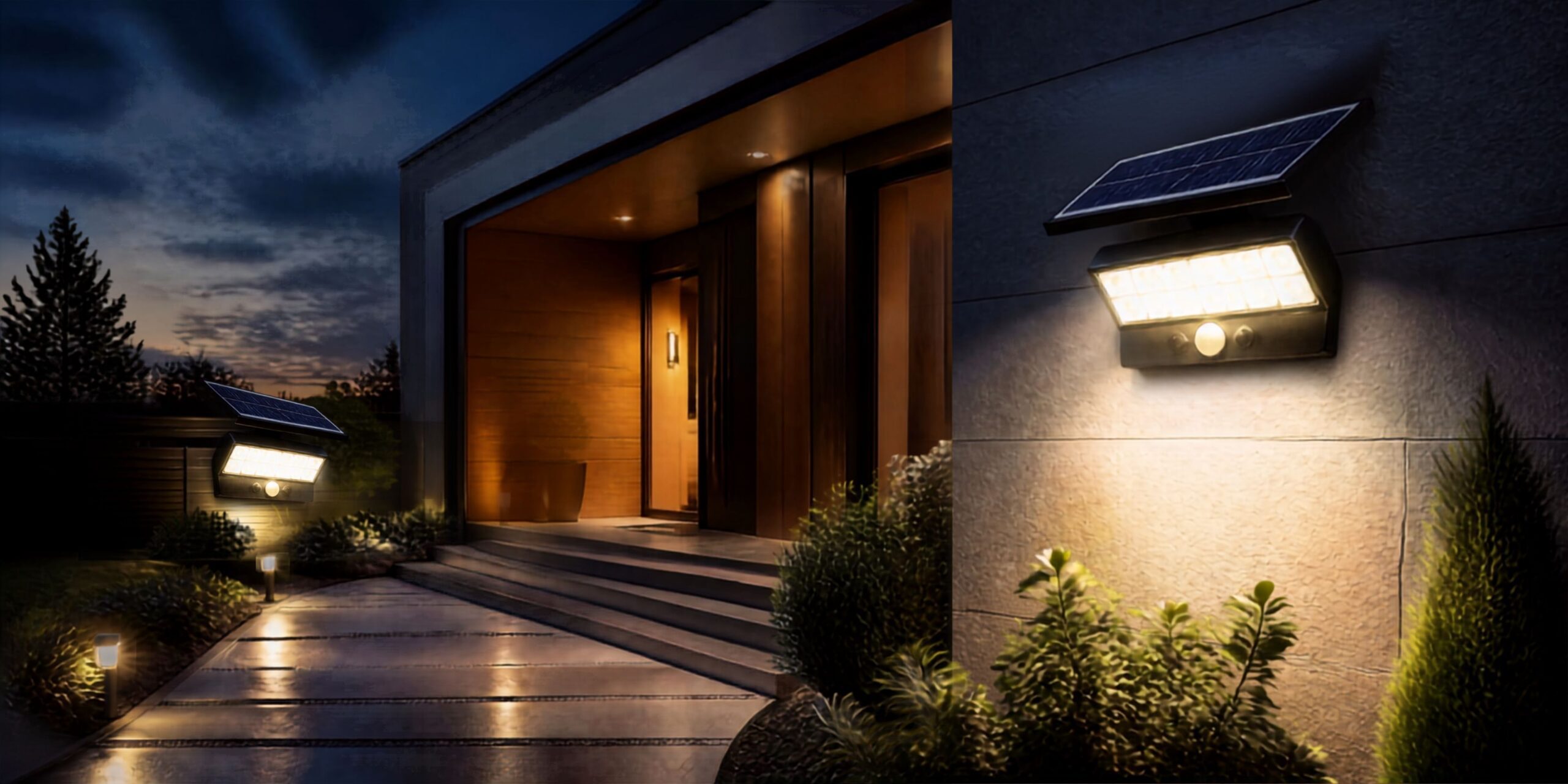
A bright light is not automatically a good security light. Product listings tout numbers like 4,000 lumens, 300-degree coverage, and 60-foot detection range, but those figures do not tell you whether a light will actually work well on your driveway, your side yard, or the shaded corner behind your garage.
Finding the best solar security light for outdoor use comes down to matching a light’s real-world behavior, not just its spec sheet, to the space you need to protect.
A light that performs beautifully on a sun-drenched southern porch may struggle on a tree-shaded lot in the Pacific Northwest. This guide covers what actually makes a solar security light effective, then breaks down picks by the kind of space you are lighting.
What Makes a Solar Security Light Good for Outdoor Use?
Brightness and lumens measure total output, not how well-lit an area will look. A small porch rarely needs more than a few hundred lumens, while a driveway or open backyard may call for a four-figure range. Advertised figures on budget lights are notoriously inconsistent, so treat any single number as a rough guide, not a guarantee.
Motion detection on most solar security lights relies on passive infrared (PIR) sensors, which detect body heat rather than motion itself. A very long detection range sounds appealing, but aimed toward a sidewalk, it may trigger constantly from passing cars. In any motion sensor solar light review, adjustable sensitivity and a well-aimed detection zone matter more than raw detection distance.
Solar panel and charging placement often matters more than the light’s own specifications. A powerful fixture with a panel in partial shade will underperform a modest light with a panel in full sun, which is why many higher-end lights use a separate panel on a cable so it can be mounted for maximum sun regardless of where the light itself goes. Seasonal shifts matter too: a panel with full sun in July may sit in shadow once the winter sun angle changes, especially in northern states.
Battery and runtime figures from manufacturers assume ideal conditions. Real-world runtime depends on how much sun the panel got that day, how often the light triggers, and local weather. During extended cloudy stretches, common in the Pacific Northwest or Midwest winters, even a well-rated battery can run low before dawn.
Weather resistance is commonly rated with an IP (Ingress Protection) code, such as IP65: the first digit is dust resistance, the second is water resistance. IP65 generally means the housing is dust-tight and can handle water jets, suiting typical outdoor exposure, though no rating makes a fixture immune to long-term wear, especially in snowy or freeze-thaw climates.
Our Top Solar Security Light Picks for Different Outdoor Needs
Each pick below is organized around a specific outdoor situation rather than ranked first to last. Confirm current specifications on the manufacturer’s page before buying, since models change frequently.
Best Overall For General Home Security
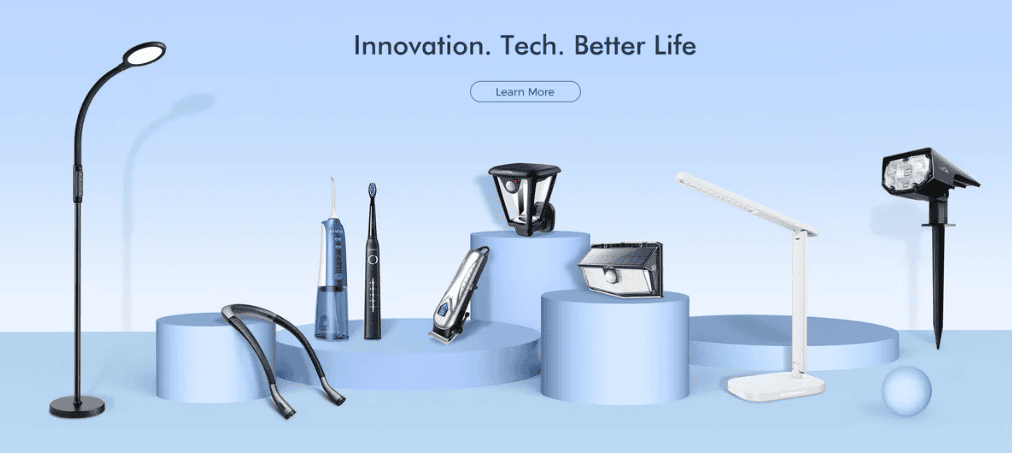
For an average single-family home, a well-reviewed all-around option like the LITOM Solar Motion Sensor Light line is a reasonable start. It combines a wide-angle PIR sensor, multiple lighting modes including a dim standby mode, and an integrated panel suited to most porches, entryways, and garage exteriors. The trade-off: an integrated panel cannot be repositioned independently, so the mounting spot needs decent sun exposure already.
Best For Driveways And Large Outdoor Areas
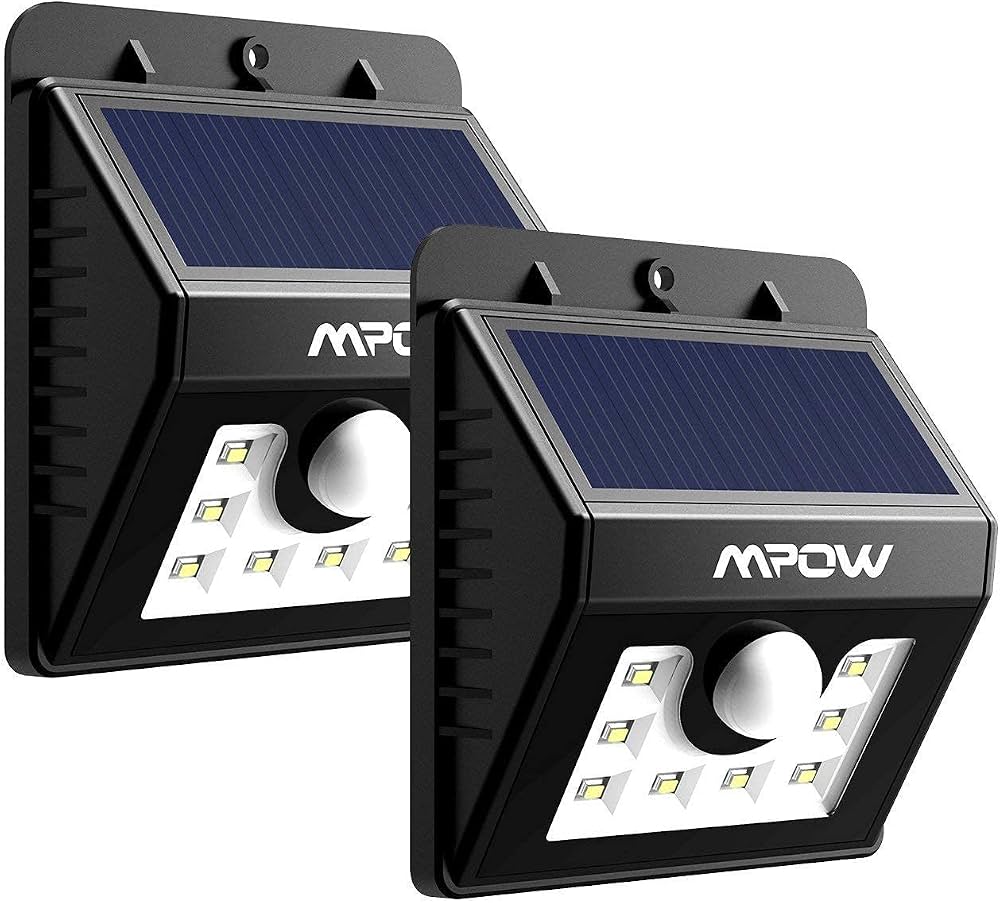
Driveways need broader coverage than a single-head porch light can provide. Dual-head or adjustable-head designs, such as those from Mpow, let you aim one head down the driveway and the other toward a side approach. A separate solar panel on an extension cable is useful here too, letting the panel mount on a pole or roofline with clearer sun exposure than the fixture itself might get.
Best Solar Flood Light For Maximum Area Coverage
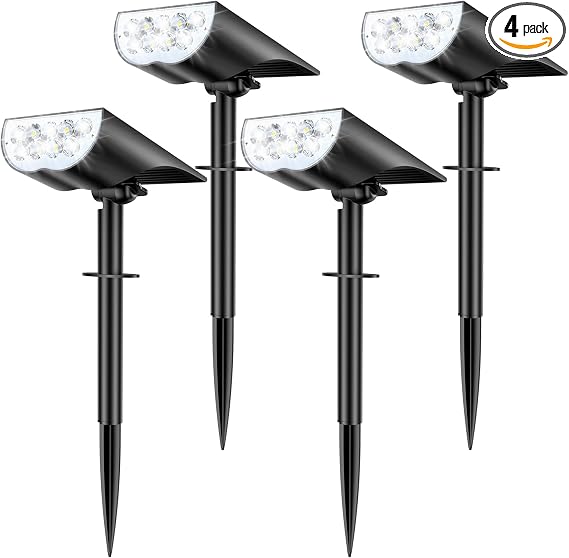
When the goal is lighting a large open area rather than watching one entry point, a dedicated solar flood light fits better than a compact motion-sensor unit. Flood-style lights, such as higher-output models from Aootek or URPOWER, use a broader beam spread to wash a wide area rather than a narrow, focused beam, and work well mounted eight to ten feet up on a garage wall or a corner facing the backyard. Because they draw more power, panel placement matters even more here.
Best Budget Option
A lower price does not have to mean poor quality. Budget options from brands like Baxia Technology typically drop extras such as a dim standby mode or app connectivity, while still delivering a functional PIR sensor and adequate brightness for a small porch, shed, or side entrance. Compromises tend to show up in build materials and battery longevity over years, making these a sensible choice for secondary areas rather than your primary security zone.
Best For Adjustable Coverage
For irregular spaces such as corners, fence lines, or narrow side yards, a light with independently adjustable heads is worth the extra cost, letting you angle each lamp to cover an L-shaped path where a single fixed beam would leave one side dark.
Best For Smart-Home Users
A small number of solar security lights include app-based control, scheduling, or notifications through a smart-home ecosystem. Worth noting: these are lighting products, not cameras. Unless a model explicitly states it includes video recording, an app-connected light only controls when and how brightly it turns on; video monitoring calls for a dedicated security camera instead.
Outdoor Solar Security Light Comparison: Which One Fits Your Space?
| Product Type | Best For | Motion Sensor | Coverage | Solar Setup | Standout Feature |
| All-around motion light (e.g., LITOM-style) | Porch, entryway, garage | Yes, adjustable | Moderate, single zone | Integrated panel | Balanced value |
| Dual-head motion light (e.g., Mpow-style) | Driveway, dual approach | Yes, wide angle | Broad, two directions | Often separate panel | Flexible aiming |
| Solar flood light (e.g., Aootek/URPOWER-style) | Backyard, large open area | Sometimes optional | Wide beam spread | Higher power draw | Maximum area brightness |
| Budget compact light (e.g., Baxia-style) | Shed, side door, secondary areas | Yes, basic | Small to moderate | Integrated panel | Low cost |
| Smart-connected light | Households using a smart-home app | Yes, app-adjustable | Varies by model | Varies by model | Remote scheduling |
Solar Security Light vs Solar Flood Light: What’s the Difference?
A solar security light emphasizes targeted illumination around a specific point, such as a doorway or garage entrance, and relies on its motion sensor to conserve battery between activations.
A solar flood light washes a much larger area in brighter, broader light, prioritizing coverage over precision, and is common on driveways, large yards, and building exteriors where general visibility matters more than a single detection zone.
Neither is universally better; a driveway might benefit from a flood light paired with a smaller motion light near the door, rather than one fixture trying to solve both problems.
Where Should You Install a Solar Security Light?
Driveway: Aim to illuminate approaching vehicles and people without pointing directly at oncoming headlights, which creates glare rather than useful visibility.
Front door: Prioritize a sensor that reliably picks up someone approaching rather than one with the longest possible range, which can pick up too much street activity.
Garage: Mounting height and sensor range both matter, since vehicles create larger motion patterns than a person walking.
Backyard: Coverage and panel sun exposure usually matter more than raw brightness, since backyards often have more open sky for charging.
Side yard: A wider detection angle is often more useful than a longer detection range in narrow spaces.
Shed or outbuilding: Simplicity and dependable motion activation matter more than advanced features here.
The solar panel’s placement can matter just as much as the light’s position. A perfectly aimed light with a poorly placed panel will still underperform.
Common Solar Security Light Features That Actually Matter
Adjustable motion sensitivity reduces false triggers from pets or traffic. Adjustable lighting duration controls how long the light stays on after triggering. Multiple brightness modes, a dim standby plus a brighter triggered mode, balance visibility with battery conservation.
Adjustable light heads matter most in irregular spaces. A separate solar panel helps whenever the ideal light spot and ideal sun exposure differ. A replaceable battery, where available, extends usable life well past a sealed battery. Dusk-to-dawn mode suits areas wanting a steady glow all night, though it draws more battery.
What to Ignore When Shopping
Inflated lumen claims are common on budget lights, with actual output often lower than advertised. Unrealistic runtime claims rarely account for cloudy weeks or frequent triggering.
Huge LED counts are a marketing shortcut; two dozen low-quality LEDs do not beat a handful of well-engineered ones. Excessive detection range causes more nuisance triggers than benefit near sidewalks. Cheap construction shows up over time through cracked housings or failed seals, which matters more outdoors than almost any other spec.
How Much Should You Spend, and How Do You Choose?
Price generally tracks with build quality, battery capacity, and adjustability rather than any single spec. Lower-cost lights use smaller batteries and fixed components; mid-range lights add separate panels and better sensor tuning; higher-end options add app control and sturdier housings. Compare features against your intended use rather than shopping by price alone.
Narrow your choice by location (driveway, porch, garage, backyard, or side yard each call for different beam widths and sensor placement), coverage (a small target versus a broad area), sunlight (a shaded spot favors a separate-panel design), operation (motion-only versus dusk-to-dawn), installation (integrated panels are simpler; separate panels offer more flexibility), and maintenance (how easily you can access the battery and clean the panel).
Getting Better Performance and Weighing the Trade-offs
Install the panel where it gets consistent, direct sunlight, and keep it clean, since dust and pollen buildup reduces charging efficiency. Avoid aiming the sensor toward heat sources like dryer vents or grills.
Test the detection zone at night after installation and adjust the light heads before finalizing the mount; keep seasonal sun angles in mind near trees that change foliage through the year.
Advantages include no hardwiring or electrician, straightforward installation, no added electricity cost, flexible placement, and motion-activated efficiency for areas without a nearby outlet.
Limitations include dependence on adequate sunlight, batteries that gradually lose capacity, reduced performance in extended cloudy stretches, and real sensitivity to mounting location.
They make the most sense for entryways, garages, sheds, or yard perimeters in regions with reliable sun; a wired fixture may better suit homes in consistently overcast climates or spots that need constant all-night brightness.
FAQ
Q1: Are solar security lights bright enough for outdoor security?
Many models provide enough brightness for entryways, porches, and small yards, though very large or completely dark properties may need multiple units or a dedicated flood light.
Q2: How many lumens should an outdoor solar security light have?
A small porch or side door often works well in the low hundreds of lumens, while a driveway or open backyard typically benefits from a four-figure range, though beam placement matters as much as the raw number.
Q3: Are solar security lights effective in winter?
They can be, but shorter daylight and lower sun angles reduce charging efficiency, so performance in northern or overcast climates may be less consistent than in summer.
Q4: Where is the best place to install a solar security light?
The ideal spot balances the area you need to illuminate with a location that gives the solar panel consistent direct sunlight for most of the day.
Q5: Is a solar flood light better than a solar motion sensor light?
Neither is universally better. A flood light suits large, open areas needing broad illumination, while a compact motion sensor light often fits targeted spots like doorways and walkways.
Final Verdict
There is no single best solar security light for outdoor use for every home. For general home security, prioritize a balanced, well-reviewed all-around model. For driveways and larger areas, prioritize coverage and a separate solar panel. For maximum area brightness, a dedicated flood light makes more sense than a compact motion light.
For shaded properties, panel placement deserves more attention than rated output. For year-round convenience, look for adjustable motion sensitivity and lighting duration. For smart-home households, confirm ecosystem compatibility, remembering that lighting and camera functionality are not the same thing unless a product explicitly includes both.



Leave feedback about this